
Top 5 AI Copywriting Mistakes to Steer Clear Of
AI copywriting tools have revolutionized the way content creators and marketers work. As someone who’s spent considerable time navigating AI content creation, I’ve seen firsthand how these tools can speed up writing and spark creativity. But as with any technology, there are pitfalls. Avoiding common AI copywriting mistakes is crucial if you want your content to resonate with readers and perform well online. In this article, I’ll walk you through the top 5 blunders many encounter when using AI writing tools and share practical tips to steer clear of them. Whether you’re just getting started or looking to sharpen your skills, this guide will help you enhance your AI-driven content creation.

Understanding AI Copywriting Basics
Before diving into AI copywriting mistakes, it’s essential to grasp the fundamentals of how these tools work. AI copywriting tools are powered by advanced language models that analyze vast amounts of text data and generate content based on patterns they learn. They can craft blog posts, product descriptions, social media captions, and more—all in a fraction of the time it might take a human writer.
However, AI doesn’t truly understand meaning or context like a human does. It predicts what should come next in a sentence based on probabilities, which can sometimes lead to odd phrasing or irrelevant content. This limitation is at the heart of many AI copywriting errors. Knowing this helps us set realistic expectations and use these tools effectively.
For example, a popular AI tool might generate a great headline but then produce a body paragraph that feels generic or off-topic. This happens because the AI relies heavily on data patterns rather than genuine insight. As a result, content creators should view AI copywriting as a powerful assistant rather than a flawless replacement for human input.
Another key point is that AI writing tools thrive on clear instructions. The more specific your prompt, the better the output. This means you need to invest time upfront in crafting detailed prompts that guide the AI toward your desired tone, style, and message. Vague or broad prompts often result in generic or confusing text.
Understanding these basics sets a solid foundation. It reminds us that AI copywriting is a collaboration between human creativity and machine efficiency. When used thoughtfully, it can supercharge productivity while maintaining quality.
Importance of Avoiding Mistakes in AI-Driven Content
Why should we care so much about avoiding AI copywriting mistakes? Because content quality directly impacts brand reputation, user engagement, and search engine rankings. When AI-generated content contains errors or lacks authenticity, it undermines trust with your audience.
One common consequence of poor AI content is reduced readability. If your blog posts or marketing materials sound robotic or repetitive, readers quickly lose interest. Engagement metrics like time on page and bounce rate suffer, which can ultimately hurt your SEO performance. Google’s algorithms increasingly favor content that demonstrates expertise, authority, and trustworthiness—qualities that poorly crafted AI content often lacks.
Moreover, AI copywriting errors can lead to factual inaccuracies. Since AI models generate text based on training data, they might produce outdated or incorrect information without realizing it. In industries like finance, healthcare, or technology, these mistakes can cause serious damage to your credibility.
Another angle is legal and ethical implications. Plagiarism is a risk if AI tools inadvertently reproduce existing content too closely. Many businesses have faced backlash or penalties for publishing unoriginal or misleading AI-generated text. Ensuring originality and transparency in your AI content creation process protects your brand from such pitfalls.
Finally, avoiding these mistakes helps maintain a consistent brand voice. AI tools can sometimes create disjointed or inconsistent tones if prompts aren’t clear or if human oversight is lacking. This inconsistency confuses customers and weakens your overall marketing strategy.
In short, steering clear of AI copywriting mistakes isn’t just about technical finesse—it’s about building trust, authority, and meaningful connections with your audience.
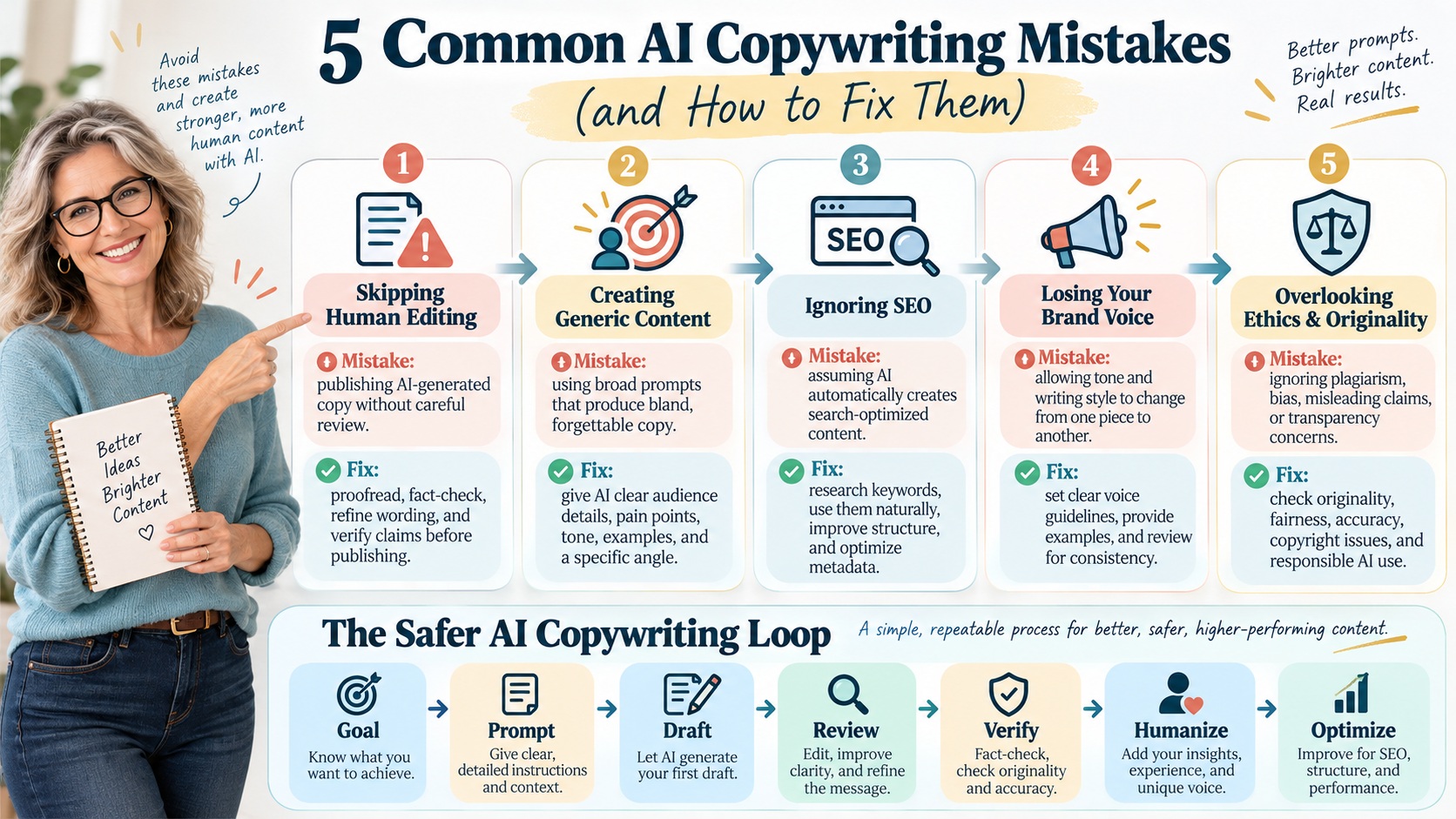
Analyzing Common AI Copywriting Errors
Now let’s explore the top 5 AI copywriting mistakes I’ve seen most often. Understanding these errors in detail allows you to recognize and correct them in your own work.
1. Overreliance on AI Without Human Editing
The biggest blunder is trusting AI-generated content without thorough human review. AI can produce coherent text, but it often misses nuance, factual accuracy, and subtle tone adjustments. For example, an AI might create a product description that sounds fine but includes incorrect specifications or exaggerated claims. Without human editing, these mistakes slip through.
Always proofread and fact-check AI content carefully. Use your expertise to refine wording, verify data, and ensure the message aligns with your brand values. This step transforms rough AI drafts into polished, trustworthy copy.
2. Producing Generic or Vague Content
AI writing tools sometimes generate bland or overly general content that lacks personality. This happens when prompts are too broad or the AI attempts to appeal to everyone at once. For instance, instead of a compelling call-to-action, you might get a dull phrase like “Buy our product now.” Such generic text fails to engage readers or differentiate your brand.
To avoid this, craft specific prompts that guide the AI toward unique angles, customer pain points, or emotional triggers. Injecting creativity and storytelling elements ensures your content stands out.
3. Ignoring SEO Best Practices
AI tools don’t always optimize content for search engines automatically. They might overstuff keywords, neglect meta descriptions, or fail to structure content with headings and bullet points. Ignoring SEO leads to lower visibility and fewer organic visitors.
Integrate SEO strategies manually by researching relevant keywords, using them naturally, and formatting content for readability. Tools like Moz’s Beginner’s Guide to SEO offer excellent guidance on optimizing your writing.
4. Producing Inconsistent Tone and Style
AI-generated content can fluctuate in tone or style within the same piece, causing confusion for readers. For example, a blog post might start formally but switch to casual language halfway through. This inconsistency damages your brand’s professional image.
Prevent this by setting clear tone guidelines in your prompts and reviewing the entire content for uniformity. Also, consider using style guides to maintain consistent voice across all AI-generated materials.
5. Overlooking Ethical and Legal Concerns
AI content can sometimes unintentionally plagiarize or produce biased language. Since AI learns from existing data, it may replicate content too closely or reflect societal biases present in its training set. These issues can lead to legal troubles or alienate your audience.
Use plagiarism checkers like Grammarly’s plagiarism checker and review content for fairness and inclusivity. Transparency about AI use in your content creation process also builds trust.
Tips to Enhance Your AI Copywriting Skills
Now that you know the common pitfalls, here are actionable tips to boost your AI copywriting skills and produce outstanding content.
Develop Clear and Specific Prompts
Effective AI content starts with clear instructions. Instead of asking for “a blog post about marketing,” specify the target audience, tone, length, and key points. For example: “Write a 700-word blog post for small business owners explaining five digital marketing strategies with a friendly tone.”
This clarity helps the AI generate focused, relevant content that needs less editing.
Combine AI Output with Human Creativity
Think of AI as your writing partner rather than a replacement. Use AI to generate ideas, outlines, or first drafts, then weave in your unique insights, anecdotes, and brand voice. This blend leads to richer, more engaging content.
Regularly Update Your Knowledge
AI tools and algorithms evolve rapidly. Stay informed about new features, limitations, and best practices through blogs, webinars, and forums. This ongoing learning ensures you leverage AI writing tools effectively and ethically.
Experiment with Different AI Tools
Not all AI writing tools are created equal. Some excel at short-form content, others at long-form. Try various options like Jasper AI, Copy.ai, or Writesonic to find the best fit for your needs. Combining outputs from multiple tools can also spark creativity.
Use Editing and SEO Tools Alongside AI
Pair AI-generated drafts with editing tools like Hemingway Editor to improve readability and clarity. Supplement with SEO audit tools to ensure your content ranks well and reaches the right audience.
Utilizing AI Writing Tools Effectively
Maximizing AI writing tools requires a strategic approach. Here’s how to get the most out of your AI content creation process.
Set Clear Goals for Each Piece
Before you start, define what success looks like. Are you aiming for increased traffic, higher conversions, or brand awareness? Knowing your objectives helps you tailor prompts and evaluate AI output critically.
Train the AI with Your Brand Voice
Many AI platforms allow you to customize tone and style settings. Feed them examples of your best content to “train” the AI. This customization reduces tone inconsistencies and produces more authentic content aligned with your brand.
Break Down Large Projects
For extensive content like ebooks or pillar pages, break the project into smaller sections. Generate and review each part separately to maintain quality and coherence. This modular approach makes editing easier and reduces overwhelm.
Incorporate Feedback Loops
Collect feedback from colleagues, customers, or editors on AI-generated content. Use their insights to refine prompts and editing processes continuously. This iterative approach boosts content quality over time.
Stay Transparent About AI Use
If appropriate, disclose when AI tools have contributed to your content. Transparency fosters trust and sets realistic expectations with your audience. It also encourages ethical AI adoption across industries.
By applying these strategies, you can harness AI writing tools as powerful allies rather than sources of frustration.
Conclusion
AI copywriting mistakes can easily undermine your content’s effectiveness, but they’re avoidable with the right approach. Understanding AI copywriting basics helps set realistic expectations about what these tools can and cannot do. Recognizing the importance of quality ensures you prioritize editing and SEO alongside AI-generated drafts. By analyzing common errors—such as overreliance on AI, generic content, SEO neglect, inconsistent tone, and ethical oversights—you become better equipped to steer clear of pitfalls.
Enhancing your AI copywriting skills involves clear prompts, combining human creativity with AI efficiency, and staying up to date with new tools and techniques. Finally, using AI writing tools effectively means setting goals, customizing for your brand voice, breaking down projects, embracing feedback, and maintaining transparency.
With these insights, you can confidently integrate AI into your content creation workflow and produce engaging, trustworthy, and optimized copy that connects with your audience. For more on mastering AI content strategies, check out Content Marketing Institute’s guide to AI copywriting.
Visit our GPT, Prompt & Skills Site – The AI Knowledge Vault
To see the full system:
 Read:
Systeme.io Review: All-in-One Business Platform
Effective Strategies for Incorporating AI in Your Business Operations
Mastering the Art of Evaluating AI Business Performance with AI Business Audit Tactics
Leveraging AI for Enhanced Online Sales Performance
Best AI Marketing Tools for Boosting Your Online Business
Ultimate Guide to Mastering AI Copywriting Techniques in 2026
Top 10 AI Content Creation Tips for High-Quality AI-Driven Content
Top AI Copywriting Tools Reviewed: 2026 Guide
📅 Last updated:
