
Effective Strategies for Incorporating AI in Your Business Operations
Implementing AI in business can feel like stepping into a whole new world. I remember when I first explored AI tools—it was both exciting and overwhelming. Yet, the benefits of AI for business growth and efficiency are undeniable. From automating repetitive tasks to making smarter decisions, AI is reshaping how companies operate. If you’re curious about how to start or improve your AI implementation strategies, this guide will walk you through practical steps and insights. Let’s dive into how to seamlessly blend AI into your business operations and see real results.

Understanding the Role of AI in Business
Before diving into AI tools, it’s crucial to understand what AI truly brings to the table in a business context. AI, or artificial intelligence, involves machines mimicking cognitive functions like learning and problem-solving. When applied correctly, it can enhance productivity, customer experience, and decision-making.
For example, AI-powered chatbots can handle customer inquiries 24/7, reducing the workload on support teams. According to a report by McKinsey, companies that leverage AI effectively can increase productivity by up to 40%. This translates into faster turnaround times and better service quality.
In addition, AI helps businesses analyze vast amounts of data to uncover trends that humans might miss. For instance, retailers use AI algorithms to predict purchasing patterns, adjusting inventory accordingly to avoid overstock or shortages. This level of insight drives smarter, data-driven strategies that fuel business growth.
However, understanding AI’s role isn’t just about the technology itself—it’s about identifying areas within your business where AI can solve real problems or streamline processes. Whether it’s automating repetitive tasks in marketing or optimizing supply chain logistics, knowing where AI fits is key before jumping into implementation.
In short, AI is a powerful tool that can transform your operations, but it requires a clear understanding of its potential and limitations. From customer service to internal workflows, AI’s role varies, and recognizing these nuances helps you craft better AI implementation strategies.
Selecting the Right AI Tools for Your Business
Choosing the right AI tools can make or break your success with AI implementation. The market is flooded with AI solutions, from simple chatbots to complex machine learning platforms. The trick is to find tools that align with your business goals and existing systems.
Start by identifying your primary challenges or opportunities. For example, if your goal is to improve customer engagement, AI-driven CRM platforms or chatbots like Zendesk Chat might be ideal. On the other hand, if your focus is on automating data analysis, consider AI-powered analytics tools such as Tableau or DataRobot.
Evaluating Features and Scalability
When assessing AI tools, I recommend looking beyond just features. Scalability is critical. Will the tool grow with your business? Can it handle increased data volumes or more complex tasks as you expand? For example, a small business might start with a basic AI chatbot, but a rapidly growing company will need more sophisticated natural language processing capabilities.
Also, consider ease of integration. Some AI tools come with APIs that connect easily to your current software stack. This reduces implementation time and avoids disruption. Tools with user-friendly interfaces and good customer support are also preferable, especially if your team is new to AI.
Cost vs. ROI
Cost is always a factor, but it’s helpful to think in terms of ROI rather than just upfront expenses. For instance, AI tools that automate manual tasks may have a higher initial cost but save hours of labor weekly, creating long-term savings. It’s useful to request trial periods or demos to see if the tool truly delivers value before committing.
Ultimately, selecting the right AI tools involves careful research and alignment with your business objectives. The right choice sets the foundation for smooth AI integration and meaningful business growth.
Integrating AI into Existing Workflows
Once you have your AI tools, the next challenge is integration. This step often determines whether AI becomes a seamless asset or a disruptive hurdle. I’ve seen businesses struggle when AI is implemented as a separate silo rather than an integrated system.
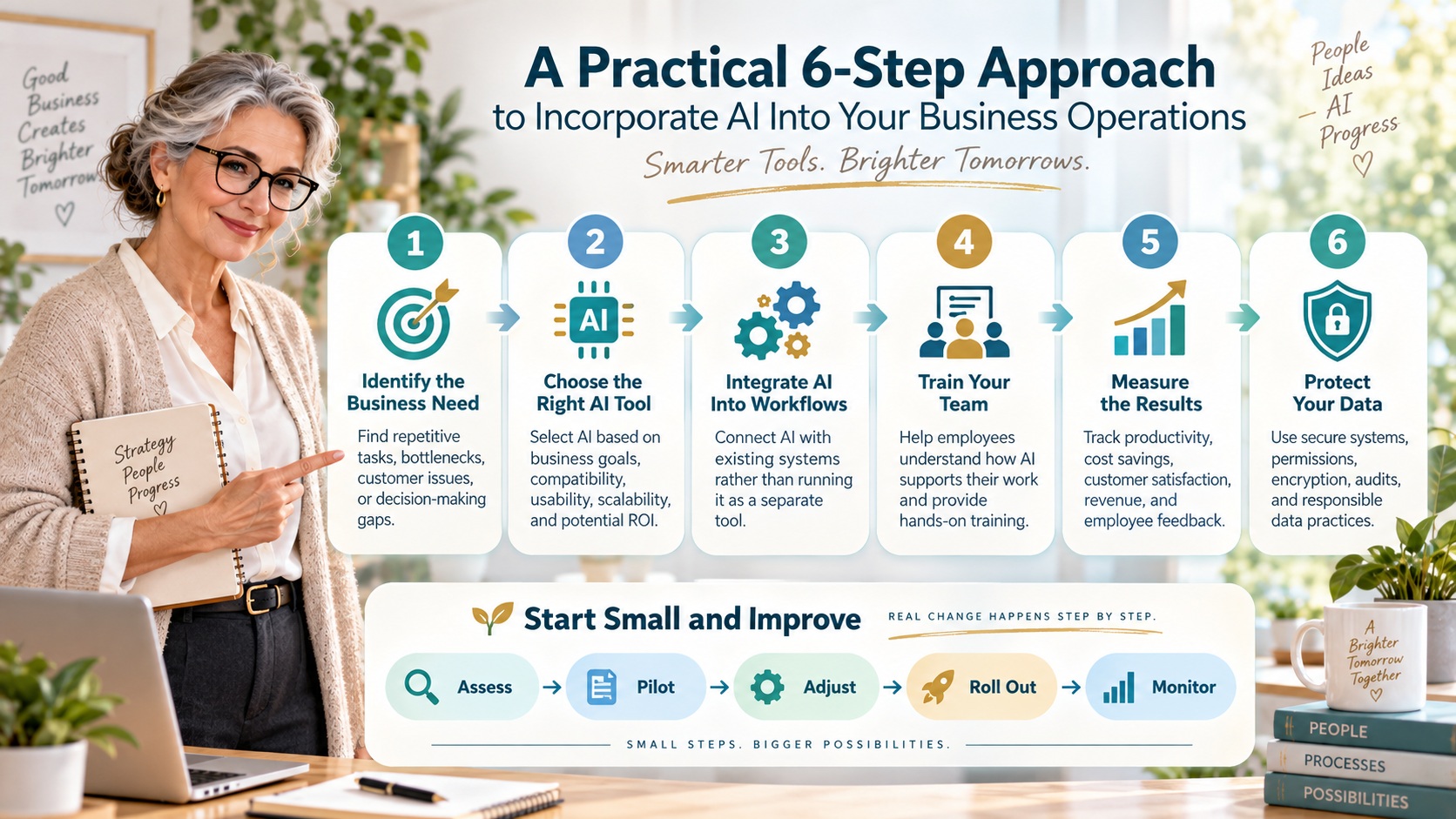
Start by mapping out your current workflows and pinpointing where AI can add value. For example, if your sales team spends hours on lead qualification, integrating AI-powered lead scoring directly into your CRM can automate this process. This means leads are automatically prioritized, saving time and increasing conversion rates.
Step-by-Step Systems for Integration
- Assessment: Identify processes that benefit most from AI automation or augmentation.
- Pilot Testing: Implement AI on a small scale within a specific workflow to observe impact.
- Adjustment: Gather feedback from users and tweak AI settings or integration points.
- Full Rollout: Expand AI usage across departments once confident in performance.
- Continuous Monitoring: Track AI effectiveness and optimize regularly.
This step-by-step approach ensures AI is not just a flashy addition but a functional part of your daily operations. Integration also involves training systems to communicate effectively. For example, your AI tools should sync with your inventory management, customer databases, and marketing platforms to provide holistic insights.
Remember, seamless integration improves adoption rates among employees and maximizes the benefits of AI implementation strategies. When AI feels like a natural extension of existing workflows, it drives real operational efficiency and business growth.
Training Employees for AI Adoption
AI implementation isn’t just about technology—it’s about people. Employees are the ones interacting with AI tools daily, so their buy-in and understanding are critical. I’ve found that proper training can turn AI from a source of anxiety into an empowering resource.
Start by educating your team on what AI is and what it isn’t. Clear misconceptions help reduce resistance. For example, emphasize that AI is designed to assist, not replace, human roles. Highlight specific benefits like freeing up time from mundane tasks or providing data-driven insights to improve decision-making.
Creating Effective Training Programs
Training should be practical and hands-on. Provide tutorials, workshops, and real-life scenarios where employees can practice using AI tools. For instance, customer service reps can simulate conversations with AI chatbots to understand their capabilities and limitations.
Encourage a culture of continuous learning. AI technologies evolve rapidly, and ongoing education keeps your team up to date. Consider appointing AI champions within departments who can support colleagues and share best practices.
Addressing Challenges and Building Confidence
Some employees may worry about job security or feel overwhelmed by new technology. Open communication and transparency are vital. Involve teams early in the AI adoption process, listen to their concerns, and demonstrate how AI enhances their roles.
By investing in comprehensive training and fostering a positive mindset, you create an environment where AI implementation strategies succeed because your people are ready and confident to use these tools effectively.
Measuring the Impact of AI Implementation Strategies
Implementing AI without tracking its impact is like setting sail without a compass. Measurement helps you understand if your AI efforts are driving the expected business growth and efficiency. I always recommend establishing clear metrics from the start.
Key Performance Indicators (KPIs) for AI
- Productivity Gains: Reduction in time spent on specific tasks after AI adoption.
- Cost Savings: Decrease in operational costs attributable to AI automation.
- Customer Satisfaction: Improvements in response times or service quality through AI-powered support.
- Revenue Growth: Increased sales or upsell rates linked to AI-driven insights.
- Employee Engagement: Feedback on AI usability and its impact on workload.
For example, after integrating an AI chatbot, a company might track the number of customer queries resolved without human intervention and the average response time. These data points show direct benefits and areas for improvement.
Tools for Monitoring AI Performance
Many AI platforms provide dashboard analytics to help track usage and outcomes in real-time. Using these dashboards, you can spot trends, identify bottlenecks, and make data-driven decisions to refine AI applications.
Regular review meetings with your team to discuss AI performance also encourage transparency and continuous optimization. If a particular AI tool isn’t delivering, you can pivot quickly rather than sticking with ineffective systems.
Ultimately, measuring the impact ensures your AI implementation strategies remain aligned with business goals and continue to drive meaningful growth.
Ensuring Data Security in AI Applications
With great power comes great responsibility—especially when it comes to AI and data. AI systems often require access to vast amounts of sensitive business and customer data. Protecting this information is non-negotiable to maintain trust and comply with regulations.
Understanding AI Data Risks
AI applications can be vulnerable to data breaches, unauthorized access, and misuse of information. For instance, an AI-powered marketing platform might store customer profiles that include personal details. Without proper security controls, this data could be exposed.
Best Practices for Securing AI Systems
- Data Encryption: Encrypt data both in transit and at rest to prevent interception.
- Access Controls: Implement strict user permissions to limit who can view or modify AI data.
- Regular Audits: Conduct security assessments and penetration testing on AI systems.
- Compliance: Adhere to regulations such as GDPR or CCPA that govern data privacy.
- Vendor Evaluation: Ensure third-party AI providers follow robust security protocols.
For example, when working with cloud-based AI services, verify that providers have certifications like ISO 27001 or SOC 2. These attest to high standards of information security management.
By prioritizing data security, you not only protect your business but also build customer confidence. Secure AI implementation strategies are essential for sustainable business growth in today’s digital landscape.
Conclusion
Implementing AI in business is a journey that combines technology, people, and process improvements. Understanding AI’s role, selecting the right tools, integrating them thoughtfully, and training your team are foundational steps. Measuring outcomes ensures you stay on track, while strong data security protects your assets and reputation.
Incorporating AI effectively drives efficiency and opens new pathways for business growth. By following these strategies, you can transform AI from a buzzword into a powerful engine powering your business success.
Visit our GPT, Prompt & Skills Site – The AI Knowledge Vault
To see the full system:
 Read:
Read:
Systeme.io Review: All-in-One Business Platform
AI Business Strategies for Beginners: How to Implement AI for Growth
AI Business Growth for Beginners
Enhance Your AI Business Model: 5 Expert Tips
Leveraging AI for Enhanced Online Sales Performance
Top AI Development Tools for Entrepreneurs: A Comparative Guide
Exploring Top AI Tools for Enhanced Business Automation
AI Business Strategies for Beginners: How to Implement AI for Growth
Top AI Business Models for Beginners: A Comprehensive Guide
📅 Last updated:
