
Mastering the Art of Evaluating AI Business Performance with AI Business Audit Tactics
Evaluating the performance of an AI-driven business can feel like navigating uncharted waters. As AI continues reshaping industries, mastering AI business audit tactics becomes essential for ensuring long-term success. Understanding how to conduct a thorough AI business audit helps reveal hidden strengths, pinpoint weaknesses, and create actionable strategies for improvement. In this guide, I’ll walk you through the key components, objectives, tools, and strategies needed to evaluate business performance effectively. Whether you’re a business owner, manager, or consultant, these insights will empower you to conduct successful audits that drive growth and innovation.

Key Components of an AI Business Audit
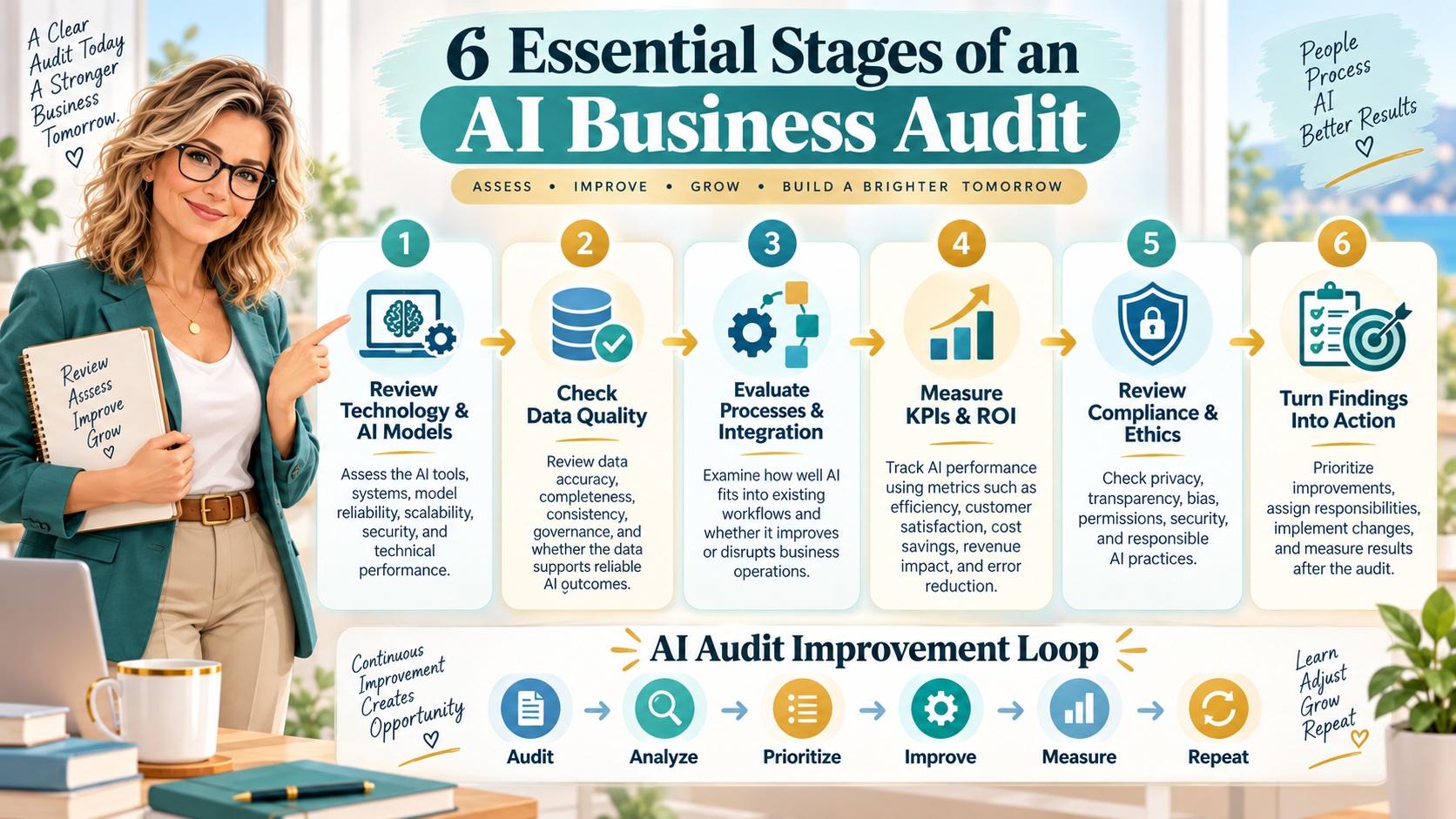
Before diving into an AI business audit, it’s crucial to know what elements to examine. An AI business audit is more than just a financial review; it’s a holistic approach that covers technology, processes, data, and outcomes. Here are the core components I focus on to get a comprehensive picture of AI business performance.
1. Technology Infrastructure and AI Models
The backbone of any AI business is its technology stack. Evaluating the infrastructure involves assessing the robustness of hardware, software platforms, and AI models in use. For example, are the AI models up-to-date with the latest algorithms? Are they scalable and secure? In one case study, a retail company upgraded its machine learning models to improve customer segmentation accuracy by 25%, directly impacting sales growth.
2. Data Quality and Management
Data is the fuel driving AI systems. I always pay close attention to the quality, volume, and variety of data the business uses. Poor data quality can lead to flawed insights and misguided decisions. For instance, in a healthcare AI audit, discovering inconsistent patient records prompted the organization to revamp its data governance, reducing error rates by 30%.
3. Business Processes and Integration
AI should seamlessly integrate with existing business processes to maximize efficiency. I evaluate how well AI tools blend into workflows and whether they enhance or disrupt operations. A logistics company I audited found that their AI-based route optimization wasn’t syncing with manual dispatch processes, causing delays. Realigning these processes boosted delivery times by 15%.
4. Performance Metrics and KPIs
Choosing the right metrics is critical. I analyze KPIs like ROI on AI investments, operational efficiency gains, customer satisfaction scores, and error reduction rates. For example, a financial firm tracking AI-driven fraud detection measured a 40% decline in false positives, which saved significant investigation time.
5. Compliance and Ethical Considerations
AI businesses must adhere to regulatory standards and ethical guidelines. I review policies related to data privacy, bias mitigation, and transparency. Taking an example from the EU’s GDPR rules, ensuring that AI systems don’t compromise user data is vital to avoid penalties and build trust.
By covering these components, an AI business audit reveals actionable insights that support informed decision-making and sustainable growth.
Setting Clear Audit Objectives
Defining clear objectives is the foundation of any successful AI business audit. Without precise goals, the audit risks becoming a vague exercise with little practical value. I find that focusing on targeted aims helps keep the audit structured and results-driven.
Aligning Audit Goals with Business Strategy
Start by aligning the audit objectives with your company’s strategic priorities. For example, if your business aims to enhance customer experience using AI, your audit should prioritize evaluating AI’s impact on customer interactions, personalization, and response times. This alignment ensures the audit delivers insights relevant to your overarching goals.
Examples of Common Audit Objectives
- Identify inefficiencies: Detect bottlenecks or underperforming AI components that hinder operations.
- Assess ROI: Measure the financial returns generated by AI initiatives relative to their costs.
- Ensure compliance: Verify adherence to legal and ethical standards around AI deployment.
- Improve data practices: Evaluate data integrity and governance to support reliable AI outcomes.
- Enhance user adoption: Understand how employees and customers engage with AI systems.
Setting SMART Objectives
To keep objectives actionable, I recommend using the SMART framework—Specific, Measurable, Achievable, Relevant, and Time-bound. For example, a SMART objective could be: “Reduce AI model prediction errors by 15% within six months through data quality improvements.” This clarity guides the audit process and helps track progress effectively.
Clear objectives also help in communicating the audit’s purpose to stakeholders, ensuring everyone is on the same page and committed to implementing recommendations.
Utilizing AI Tools for Data Analysis
One of the biggest advantages of auditing an AI business is leveraging AI tools themselves to analyze vast amounts of data efficiently. Using AI-driven analytics can uncover patterns and insights that manual methods might miss.
Popular AI Tools for Auditing
- Machine Learning Platforms: Tools like Microsoft Azure Machine Learning enable predictive analytics and anomaly detection.
- Data Visualization Software: Platforms such as Tableau help translate complex data sets into intuitive dashboards.
- Natural Language Processing (NLP): Tools like Google Cloud Natural Language analyze text data from customer feedback or internal reports.
- Robotic Process Automation (RPA): Automates repetitive audit tasks, freeing up time for deeper analysis.
Applying AI Tools to Real Audit Scenarios
Imagine auditing a marketing AI platform that personalizes email campaigns. By using AI-powered analytics, you can segment customers based on behavioral data, identify which segments respond best, and detect anomalies in campaign performance. This enables targeted recommendations, such as reallocating budget to high-performing segments or tweaking messaging for low engagement groups.
Additionally, AI tools can automate data cleansing, reducing human error and improving audit accuracy. For example, an AI-driven data validation system flagged duplicate or incomplete records in a sales database, which once corrected, improved forecasting reliability by 20%.
Challenges and Considerations
While AI tools bring power and speed, they also require expertise to interpret outputs correctly. I always emphasize the need for skilled auditors who understand AI’s capabilities and limitations. Over-reliance on automated insights without human judgment can lead to misinterpretation or missed nuances.
Integrating these tools thoughtfully into the audit process is key to unlocking their full potential for business performance evaluation.
Interpreting Audit Findings Effectively
Once you gather data and insights from an AI business audit, interpreting those findings is where the real value lies. It’s not enough to compile reports; the goal is to translate results into clear, actionable recommendations.
Contextualizing Metrics and Trends
Numbers alone don’t tell the full story. For example, if AI-powered customer service shows a 10% reduction in response time but customer satisfaction remains flat, you need to dig deeper. Perhaps the quality of responses didn’t improve, or complex issues weren’t resolved adequately. This kind of contextual analysis helps avoid misleading conclusions.
Using Visualizations to Communicate Insights
Visual tools like charts, heatmaps, and trend lines can illuminate key patterns in audit data. For example, a heatmap showing AI model accuracy across different product categories might reveal areas needing improvement. Presenting findings visually makes it easier for stakeholders to grasp complex information quickly and make informed decisions.
Prioritizing Recommendations
Not all audit findings are equally urgent or impactful. I categorize recommendations based on factors like potential ROI, ease of implementation, and alignment with business goals. For instance, fixing a data pipeline error causing frequent AI misclassifications might take precedence over upgrading UI features.
Collaborating with Teams for Insight Validation
Audit results should be validated through collaboration with relevant teams, including data scientists, IT, and business managers. Their perspectives can confirm findings or highlight overlooked issues. In one audit, involving the customer support team revealed that AI chatbots were misinterpreting certain queries, explaining some performance dips.
Effective interpretation ensures audit findings serve as a roadmap for meaningful enhancements rather than just a collection of statistics.
Implementing Changes for Business Growth
After interpreting audit results, the next challenge is translating recommendations into concrete actions that foster business growth. This phase requires careful planning, resource allocation, and communication.
Developing an Action Plan
I recommend creating a detailed action plan that spells out what changes will be made, who is responsible, timelines, and expected outcomes. For example, if the audit identified data quality issues, the plan might include steps like implementing new data validation tools, training staff, and scheduling regular data reviews.
Change Management and Stakeholder Buy-In
Successful implementation hinges on securing buy-in from all stakeholders, from executives to frontline employees. Communicating the benefits of changes and addressing concerns helps reduce resistance. In one scenario, a company introduced new AI tools for inventory management but faced pushback from warehouse staff. Engaging them early and providing training turned initial skepticism into enthusiasm.
Leveraging Continuous Improvement
AI business audits shouldn’t be one-off events. I encourage setting up feedback loops where audit findings feed into ongoing improvement cycles. This might involve quarterly mini-audits or real-time monitoring dashboards that track key AI performance metrics. Continuous improvement keeps the business agile and responsive to evolving challenges.
Real-World Example: AI-Driven Customer Retention
Consider a SaaS company that used an AI business audit to identify churn predictors in its customer base. Implementing targeted retention campaigns based on audit insights led to a 12% reduction in churn within six months, directly boosting recurring revenue. This success came from tightly integrating audit findings with marketing and customer success strategies.
Measuring Success Post-Audit
Evaluating the effectiveness of implemented changes is the final step in mastering AI business audit tactics. Without measuring success, it’s impossible to know whether the audit delivered real value or to identify areas needing further adjustment.
Defining Post-Audit KPIs
Set clear KPIs tied to the audit’s original objectives. These might include improvements in AI accuracy, cost savings, customer satisfaction, or operational efficiency. For example, if the audit aimed to improve AI model reliability, tracking error rates before and after implementation provides a tangible measure of success.
Using Dashboards for Real-Time Monitoring
Technology allows continuous tracking of performance through dashboards that provide real-time updates on key metrics. This visibility helps catch issues early and maintain momentum. For instance, a company monitoring AI-driven sales forecasting used dashboards to detect deviations and recalibrate models promptly.
Gathering Qualitative Feedback
Quantitative metrics tell part of the story, but I also value qualitative feedback from users and employees. Surveys, interviews, and focus groups can reveal insights about AI usability, acceptance, and impact on workflows. For example, positive feedback from customer service reps about new AI tools signals smoother adoption and likely productivity gains.
Adjusting Strategies Based on Results
Measuring success is an ongoing process. If some changes underperform, revisit audit data and adjust strategies. Flexibility ensures continuous alignment with business goals and evolving market conditions. In one case, a transportation company adjusted its AI route optimization after initial results showed greater fuel savings than delivery time improvements, shifting focus accordingly.
Ultimately, measuring success post-audit closes the loop, turning evaluation into a driver of sustainable AI business performance.
Conclusion
Mastering AI business audit tactics is essential for any company leveraging AI to gain a competitive edge. By focusing on key components like technology, data, and compliance, setting clear objectives, utilizing AI-powered tools, and interpreting findings with context, you create a strong foundation for evaluating business performance. Implementing changes based on audit insights and rigorously measuring success ensures that your AI initiatives lead to meaningful growth. Remember, successful audit strategies are not static—they evolve alongside your business and AI capabilities. Embrace this dynamic process, and you’ll unlock the full potential of AI in driving your business forward.
Visit our GPT, Prompt & Skills Site – The AI Knowledge Vault
To see the full system:
 Read:
Read:
Systeme.io Review: All-in-One Business Platform
AI Business Strategies for Beginners: How to Implement AI for Growth
Enhance Your AI Business Model: 5 Expert Tips
Leveraging AI for Enhanced Online Sales Performance
Top AI Development Tools for Entrepreneurs: A Comparative Guide
Exploring Top AI Tools for Enhanced Business Automation
Top AI Business Models for Beginners: A Comprehensive Guide
Mastering AI-Powered Business Techniques for Future Success
Effective Strategies for Incorporating AI in Your Business Operations
The Ultimate Guide to Launching AI Product Strategies Successfully
📅 Last updated:
