
Optimizing Recurring Revenue Generation Using AI Tools
Generating steady income through recurring revenue models has become a cornerstone for many businesses today. With the rise of AI technology, these models can now be enhanced and scaled more effectively than ever before. If you’ve been curious about how to leverage recurring revenue AI tools, you’re in the right place. In this article, I’ll walk you through how AI-powered solutions can transform your recurring income strategies, boost profitability, and create sustainable growth. Whether you’re running a subscription business, offering coaching services, or managing content platforms, understanding and implementing AI tools can be a game-changer for your revenue streams.

Understanding Recurring Revenue Models
Recurring revenue models are all about predictable, repeatable income. Instead of one-off sales, these models create a steady flow of revenue through subscriptions, memberships, or ongoing service contracts. This approach offers stability and scalability, making it a favorite among SaaS companies, content creators, and service providers alike.
There are various types of recurring revenue models, including subscription-based, usage-based, and membership-based models. Each comes with its own set of challenges and opportunities. For example, subscription models require consistent customer engagement to reduce churn, while usage-based models depend heavily on data tracking and accurate billing.
One of the biggest advantages of recurring revenue is the ability to forecast cash flow more accurately. This helps businesses plan investments, hire smartly, and optimize marketing spend. However, sustaining recurring income requires more than just acquiring customers—it demands continuous value delivery and proactive customer retention strategies.
Consider Netflix, for instance. Their subscription model is a classic example of recurring revenue done right. They invest heavily in personalized recommendations and content curation, ensuring customers remain engaged month after month. This level of personalization is difficult to achieve manually at scale, which is where AI tools come into play.
Another example is HubSpot’s freemium model that converts users into paying customers through multiple tiers of service. This tiered recurring revenue strategy helps capture different segments of customers, maximizing income potential.
Understanding these models lays the foundation for integrating AI tools effectively. AI can automate many aspects of recurring revenue management, from customer onboarding to churn prediction, freeing up valuable time and resources.
Before diving into AI-powered solutions, it’s important to grasp the nuances of your specific recurring revenue model. This clarity makes it easier to identify which AI tools will deliver the most impact.
Ultimately, recurring revenue models focus on long-term relationships rather than one-time transactions. This shift in mindset aligns perfectly with AI’s ability to analyze customer behavior and optimize ongoing engagement.
Introduction to AI Tools for Revenue Generation
AI tools for revenue generation are reshaping how businesses approach income growth. These tools use machine learning, natural language processing, and predictive analytics to automate processes and uncover new opportunities.
At their core, AI-powered revenue streams rely on data. The more quality data you feed into AI systems, the better they perform. From lead scoring to personalized marketing campaigns, AI tools can streamline every stage of the customer lifecycle.
Types of AI Tools Supporting Revenue Growth
- Customer Relationship Management (CRM) with AI: Platforms like Salesforce Einstein and HubSpot AI add predictive features to CRMs, helping identify high-value leads and sales opportunities.
- Chatbots and Virtual Assistants: AI-powered chatbots handle customer queries 24/7, boosting conversion rates and improving customer experience.
- Personalization Engines: Tools like Dynamic Yield analyze user behavior to tailor offers and content, increasing upsell and cross-sell potential.
- Revenue Forecasting Tools: AI-driven forecasting platforms predict future revenues based on historical data and market trends, enabling smarter financial planning.
- Automated Billing and Subscription Management: Solutions like Chargebee use AI to optimize payment cycles and reduce churn by managing subscriptions intelligently.
These AI tools for revenue help businesses reduce manual workloads and avoid costly mistakes. For example, predictive analytics can identify customers at risk of canceling subscriptions, allowing timely intervention.
AI also enables smarter marketing. By segmenting audiences precisely and personalizing messages, companies can improve their campaign ROI significantly. According to a report by McKinsey Analytics, AI-powered marketing can boost revenues by up to 15% while reducing costs by 20%.
While AI tools offer immense potential, choosing the right combination depends on your business goals. Some startups focus on automated customer acquisition, while others prioritize retention and upselling.
In any case, integrating AI tools into your revenue generation strategy involves a learning curve but pays off with higher efficiency and smarter decision-making.
Implementing AI-Powered Strategies for Sustainable Income
Once you understand the available AI tools, the next step is to implement AI-powered strategies that ensure sustainable recurring revenue. This means not just generating income but maintaining and growing it over time.
Personalized Customer Engagement
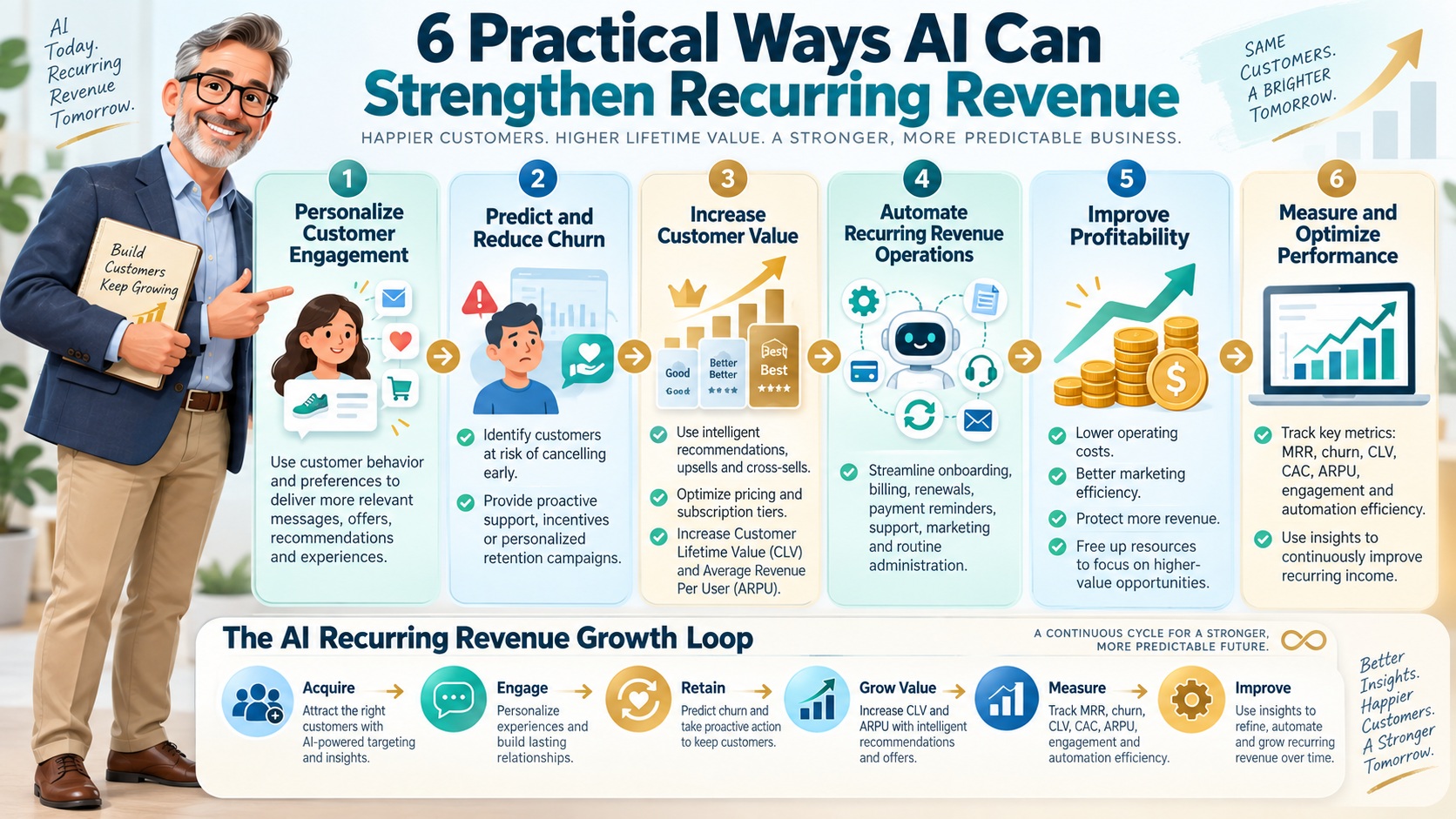
AI excels at analyzing customer data to deliver personalized experiences. For example, Netflix’s recommendation engine uses AI to suggest content tailored to individual tastes, boosting retention. You can adopt similar AI-powered personalization for your email marketing or product recommendations.
Personalization drives loyalty and reduces churn, which are critical for sustainable income. AI tools can segment your audience dynamically, sending targeted offers based on behavior and preferences.
Automated Churn Prediction and Prevention
Churn is the enemy of recurring revenue. AI-powered churn prediction models analyze customer interactions, payment history, and usage patterns to identify those most likely to cancel. Armed with this insight, your team can proactively reach out with offers, support, or incentives.
For instance, SaaS companies use AI to flag accounts at risk and trigger tailored campaigns that address user pain points before cancelation occurs. This approach can reduce churn by up to 30%, according to Gartner’s research on churn management.
Dynamic Pricing Optimization
AI tools can adjust pricing in real-time based on demand, competition, and customer behavior. This dynamic pricing strategy helps maximize revenue without alienating customers. Companies like Uber and Amazon use AI-driven pricing models to balance supply and demand efficiently.
For recurring revenue, dynamic pricing can be applied to subscription tiers or add-ons, allowing you to capture more value from different customer segments.
Upselling and Cross-Selling with AI Insights
AI tools analyze purchase histories and browsing patterns to suggest relevant upsells and cross-sells. This increases average revenue per user (ARPU) without aggressive sales tactics. For example, Amazon’s “Customers who bought this also bought” feature is powered by AI algorithms.
Implementing AI-powered recommendation engines on your platform or within your communication channels can significantly boost recurring income by increasing customer lifetime value.
Streamlined Customer Support
AI chatbots handle common questions instantly, freeing human agents to focus on complex issues. Fast, effective support improves customer satisfaction and retention. AI-driven sentiment analysis can also detect frustrated customers early, prompting timely intervention.
Overall, these AI-powered strategies work together to create a seamless, engaging customer experience that fosters loyalty and consistent revenue.
Building Long-Term Revenue Streams with AI Technology
Long-term recurring revenue growth requires forward-thinking and strategic use of AI technology. Beyond immediate gains, AI helps build scalable revenue streams that evolve with your business.
Data-Driven Product Development
AI tools analyze customer feedback, usage trends, and market data to guide product improvements and innovation. This customer-centric approach ensures your offerings stay relevant and valuable, encouraging renewals and upgrades.
For example, software companies use AI to track feature adoption and identify gaps, which informs development roadmaps aligned with user needs.
Expanding into New Markets with AI Insights
AI-powered market research tools uncover emerging trends and customer segments you might miss otherwise. This insight enables informed expansion strategies, such as launching new subscription plans tailored to different demographics.
AI can also help localize marketing and content by analyzing regional preferences and behaviors, increasing chances of success in new territories.
Automating Recurring Revenue Operations
Automation is key to scaling recurring revenue without proportional increases in overhead. AI manages billing cycles, renewals, and compliance in subscription-based businesses, reducing errors and improving cash flow.
Tools like Zuora and Chargebee integrate AI to optimize subscription lifecycles and reduce churn by automating payment retries and customer notifications.
Creating AI-Enhanced Membership Communities
For coaching and content platforms, AI can facilitate vibrant membership communities by recommending content and connecting users based on interests. This strengthens engagement and encourages longer subscriptions.
AI bots can moderate discussions, provide instant answers, and gather feedback, creating a more interactive and valuable experience.
Future-Proofing Your Revenue Model
AI technologies are evolving rapidly. Staying ahead means continuously evaluating new AI tools and integrating them wisely. This proactive approach secures your recurring revenue streams against disruption and keeps your business adaptable.
Enhancing Profitability with Automated AI Solutions
Profitability is not just about increasing revenue but also reducing costs and improving efficiency. AI-powered automation plays a vital role in this balance.
Reducing Operational Costs
AI automates repetitive tasks such as invoicing, customer onboarding, and data entry. This reduces human errors and labor costs. For example, AI-driven invoice processing can cut administrative time by over 50%, according to a study by Deloitte.
Lower operational costs translate directly into higher profit margins for recurring revenue businesses.
Optimizing Marketing Spend
AI tools help allocate marketing budgets more effectively by identifying high-converting channels and audiences. Predictive analytics forecast campaign performance, enabling marketers to avoid costly trial-and-error approaches.
With AI, you can pinpoint exactly which offers drive subscriptions and focus your resources there, increasing your marketing ROI.
Improving Customer Lifetime Value (CLV)
Automated AI systems track customer behavior across touchpoints to maximize CLV. By proactively engaging customers with personalized offers and support, you increase the chances of renewals and upsells.
AI also identifies dormant customers who might be reactivated with tailored incentives, recovering lost revenue.
Streamlining Financial Reporting and Compliance
AI-powered financial software simplifies revenue recognition, tax compliance, and auditing processes. This accuracy prevents costly penalties and frees finance teams to focus on strategic initiatives.
Leveraging AI for Fraud Detection
Recurring revenue models are vulnerable to fraudulent transactions and chargebacks. AI algorithms detect unusual patterns in real-time, protecting your revenue and reducing losses.
For example, Stripe uses AI-driven fraud prevention tools to safeguard millions in subscription payments daily.
Measuring Success: Key Metrics for AI-Driven Revenue Growth
Tracking the right metrics is essential to evaluate the effectiveness of AI tools in optimizing recurring revenue. Without clear data, you can’t make informed decisions or justify investments.
Monthly Recurring Revenue (MRR)
MRR measures predictable income generated every month. AI tools that automate billing and reduce churn directly impact this metric. Monitoring MRR growth helps assess overall revenue health.
Customer Churn Rate
Churn rate indicates the percentage of customers who cancel subscriptions. AI-powered churn prediction and prevention strategies aim to reduce this number, improving retention and income stability.
Customer Lifetime Value (CLV)
CLV estimates the total revenue a customer generates during their relationship with your business. AI-driven upselling and personalization boost CLV by encouraging longer and higher-value subscriptions.
Customer Acquisition Cost (CAC)
CAC calculates the cost to acquire a new customer. AI tools optimize marketing campaigns to lower CAC, increasing profitability on recurring revenue.
Average Revenue Per User (ARPU)
ARPU measures how much revenue each customer generates on average. AI-powered dynamic pricing and recommendation engines help increase ARPU by tailoring offers.
Engagement Metrics
For content creators and coaches, metrics like active users, session duration, and community participation reflect how AI-powered personalization impacts user engagement, which correlates with revenue growth.
Automation Efficiency
Track time and cost savings from AI automation in billing, customer support, and marketing. Quantifying these efficiencies demonstrates the value AI adds beyond revenue figures.
Using dashboards from tools like Tableau or Microsoft Power BI helps visualize these metrics in real-time, enabling agile decision-making.
Regularly reviewing these KPIs ensures your AI investments are driving tangible, sustainable revenue growth and helps identify areas for continuous improvement.
Conclusion
Optimizing recurring revenue AI tools is a powerful way to build stable, scalable, and profitable income streams. By understanding the nuances of recurring revenue models and integrating AI-powered strategies—such as personalized engagement, churn prediction, and dynamic pricing—you can unlock new growth opportunities. Long-term success depends on leveraging AI technology to automate operations, enhance customer experiences, and adapt to changing market conditions. Tracking key metrics like MRR, churn, and CLV keeps your efforts focused and measurable. Embracing AI tools for revenue is no longer optional; it’s essential for businesses ready to thrive in a competitive landscape. Start experimenting with AI solutions today and watch your recurring revenue streams flourish.
Visit our GPT, Prompt & Skills Site – The AI Knowledge Vault
To see the full system:
 Read:
Read:
Systeme.io Review: All-in-One Business Platform
AI Business Strategies for Beginners: How to Implement AI for Growth
Mastering AI-Powered Business Techniques for Future Success
Effective Strategies for Incorporating AI in Your Business Operations
The Ultimate Guide to Launching AI Product Strategies Successfully
Mastering the Art of Evaluating AI Business Performance with AI Business Audit Tactics
Leveraging AI for Enhanced Online Sales Performance
Your AI Business Model Optimization Enhancement: 5 Expert Tips
📅 Last updated:
