
AI business models for beginners – An Implementation Guide
Have you ever wondered how to start using AI in your business without needing a degree in computer science? I know I did when I first began exploring AI business models for beginners. The idea seemed overwhelming, but I quickly realized that simple AI models can be incredibly accessible and profitable. In this guide, I’ll walk you through everything you need to know to get started. We’ll cover the basics, step-by-step strategies, and common pitfalls to avoid. By the end, you’ll feel confident choosing and implementing the right AI model for your online venture. Let’s dive in and unlock the potential of AI together.

Introduction to AI Business Models
When I first heard about AI business models, I imagined complex algorithms and huge tech companies. But the truth is, AI is now accessible to everyone, even beginners. AI business models for beginners are all about using artificial intelligence to automate tasks, analyze data, and create new revenue streams. These models can help you save time, reduce costs, and scale your business faster. For example, many small businesses use AI chatbots to handle customer inquiries, freeing up time for more important work. Others use AI tools to personalize marketing campaigns, leading to higher conversion rates.
One of the best things about simple AI models is their versatility. You can apply them to almost any industry, from e-commerce to content creation. I’ve seen bloggers use AI to generate article ideas and optimize their SEO, while online coaches use AI to schedule appointments and follow up with clients. The key is to start small and focus on one area where AI can make a big impact. Don’t worry about building something from scratch; there are plenty of user-friendly tools available. Platforms like OpenAI offer APIs that let you integrate powerful AI into your existing systems with minimal coding.
Another aspect I love is how AI can help you make data-driven decisions. Instead of guessing what your customers want, you can use AI to analyze their behavior and preferences. This leads to more targeted offers and happier clients. For instance, an online store might use AI to recommend products based on past purchases, increasing average order value. Or a marketing agency could use AI to A/B test ad copy, improving click-through rates. The possibilities are endless, and the barrier to entry is lower than ever.
It’s also worth noting that AI business models are not just for tech-savvy entrepreneurs. Many tools come with drag-and-drop interfaces and tutorials that make implementation straightforward. I recommend starting with a clear goal in mind, such as reducing response time to customer queries or boosting email open rates. Then, choose a tool that aligns with that goal. Remember, the aim is to enhance your business, not complicate it. With the right approach, AI can become your secret weapon for growth and efficiency.
Understanding the Basics of Simple AI Models
Before diving into implementation, it’s crucial to grasp what simple AI models actually are. In my experience, many beginners get intimidated by jargon, but it’s have to be that way. At its core, AI involves machines performing tasks that typically require human intelligence. Simple AI models are scaled-down versions focused on specific functions. For example, a recommendation engine on a website is a type of AI model that suggests products based on user behavior. Another common one is a natural language processing model that helps with customer support through chatbots.
These models work by learning from data. They identify patterns and make predictions or decisions based on that learning. You don’t need to be a data scientist to use them; many platforms offer pre-trained models that you can customize. Take sentiment analysis, for instance. This model analyzes text to determine whether the sentiment is positive, negative, or neutral. Businesses use it to monitor social media mentions or customer reviews automatically. It’s a straightforward way to gain insights without manual effort.
Another basic model is the classification model, which categorizes data into predefined groups. An e-commerce site might use it to sort products or filter spam comments. Then there are regression models that predict numerical values, like forecasting sales based on historical data. These are all examples of simple AI models that beginners can implement with tools like IBM Watson or Google’s AI platforms. The key is to start with a clear problem you want to solve and choose a model that addresses it directly.
I also want to emphasize that simple doesn’t mean ineffective. In fact, these models can deliver significant ROI with minimal investment. A study by McKinsey found that companies using AI for customer service saw a 10-20% increase in satisfaction rates. That’s a huge win for any business. By understanding these basics, you can avoid overwhelm and focus on practical applications. Remember, the goal is to leverage AI to make your life easier and your business more efficient, not to build the next Skynet.
Types of Simple AI Models for Beginners
When exploring AI business models for beginners, it’s helpful to know the different types available. Classification models are great for sorting data, like identifying spam emails or categorizing customer feedback. Clustering models group similar items together, which is useful for market segmentation. Recommendation systems suggest products or content based on user preferences, a common feature in streaming services and online stores. Predictive models forecast trends, such as sales or website traffic, helping you plan ahead.
Each type has its own strengths, and choosing the right one depends on your business needs. For instance, if you run a blog, a recommendation system could keep readers engaged by suggesting related articles. If you’re in e-commerce, a predictive model might help manage inventory by anticipating demand. The beauty of these simple AI models is that they are often available as plug-and-play solutions. You don’t need to build them from scratch; instead, integrate them using APIs or software tools.
Another model worth mentioning is the natural language generation model, which creates human-like text. This is perfect for generating product descriptions or social media posts automatically. I’ve used this myself to scale content creation without hiring additional writers. Tools like Copy.ai make it accessible even for those with no technical background. By familiarizing yourself with these types, you can better assess which AI model aligns with your goals and resources.
Step-by-Step Guide to Implementing AI Strategies
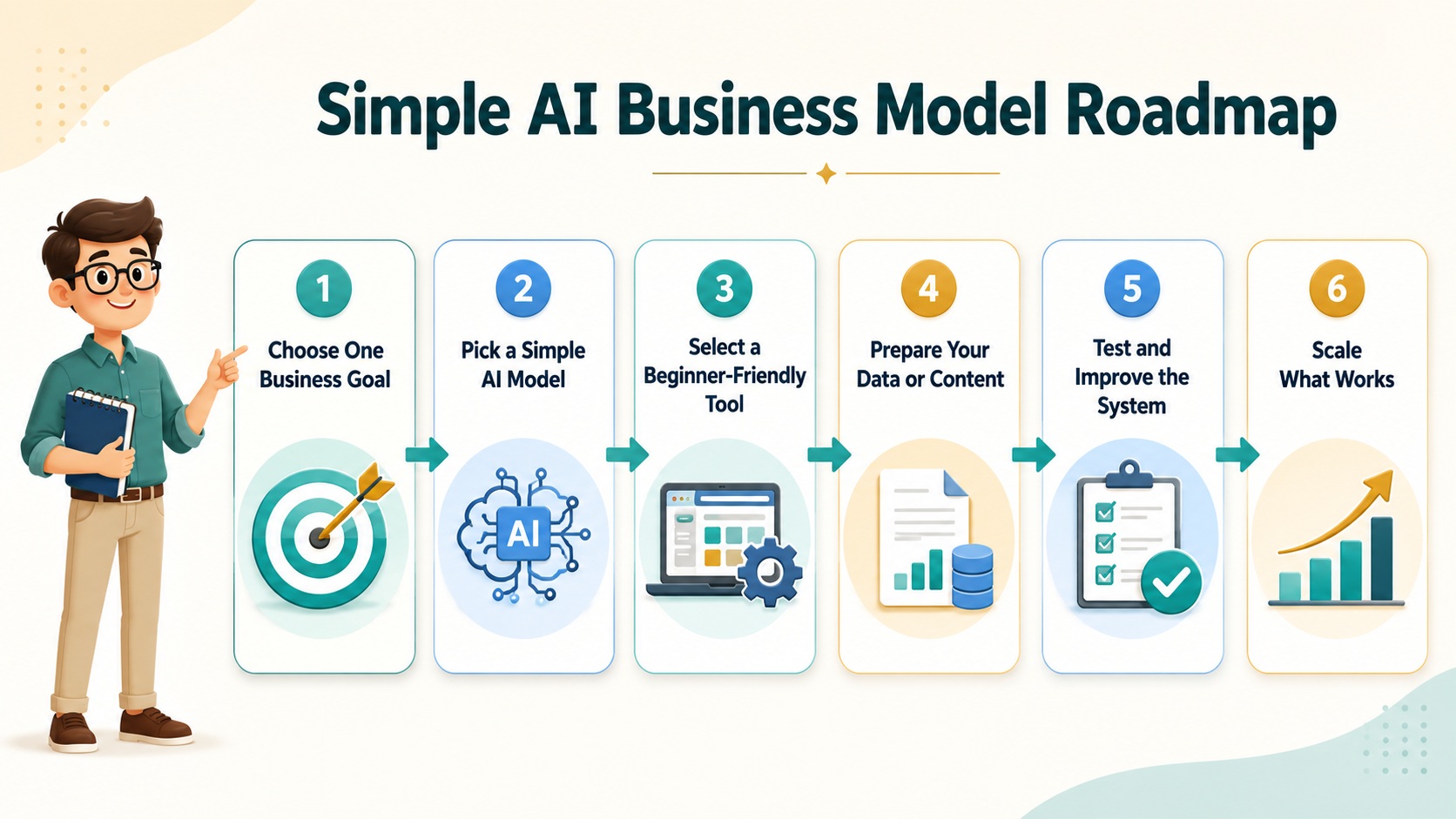
Implementing AI strategies might sound daunting, but I’ve broken it down into manageable steps that anyone can follow. First, define your objective. What specific problem do you want AI to solve? For example, if customer service is a bottleneck, aim to implement a chatbot. Next, research available tools. Look for platforms that offer simple AI models tailored to beginners. Many provide free trials, so you can test them without commitment.
Once you’ve chosen a tool, the next step is data preparation. AI models need data to learn, so gather relevant information. If you’re implementing a chatbot, collect common customer queries and responses. For a recommendation engine, compile user interaction data. Then, integrate the AI into your systems. This might involve installing a plugin, connecting an API, or using a dashboard. Most tools offer detailed guides, so follow them closely.
After integration, train the model with your data. This is where the AI learns to perform its task. For instance, feed your chatbot examples of questions and correct answers. Then, test the model thoroughly. Run simulations or use it in a controlled environment to ensure it works as expected. Monitor its performance and make adjustments as needed. AI is not set-and-forget; it requires ongoing optimization based on real-world feedback.
Finally, scale and iterate. Once the model is performing well, expand its use. Maybe add more features or apply it to other areas of your business. Keep track of metrics like time saved, cost reduction, or revenue increase to measure success. Remember, implementation is an iterative process. Don’t be afraid to tweak things based on results. With this step-by-step approach, you’ll find that implementing AI strategies is straightforward and highly rewarding.
Choosing the Right Tools for Implementation
Selecting the right tools is critical for successfully implementing AI business models for beginners. I always recommend starting with user-friendly platforms that require minimal technical knowledge. For chatbots, tools like ManyChat or Drift offer drag-and-drop builders. For data analysis, Google Analytics with AI features can provide insights without complexity. If you’re into content, platforms like Jarvis or Copy.ai help with writing and ideation.
Consider factors like cost, ease of use, and support when choosing a tool. Free versions or trials are great for testing before committing. Also, look for communities or forums where users share tips; this can be invaluable for beginners. Another key aspect is integration capabilities. Ensure the tool works well with your existing software, such as your CRM or website platform. This avoids headaches down the line and ensures a seamless implementation process.
Lastly, don’t overlook scalability. As your business grows, your AI needs might change. Choose tools that can grow with you, offering more features or higher capacity. For example, a basic chatbot plan might suffice now, but upgrade options should be available for future demands. By carefully selecting tools that match your skill level and business size, you set yourself up for a smooth and effective AI implementation journey.
Exploring Profitable AI Models for Beginners
When it comes to profitability, not all AI models are created equal. Some offer quick wins for beginners, while others require more investment. One of the most profitable simple AI models I’ve encountered is the chatbot for customer service. By automating responses, you can handle inquiries 24/7, reducing wait times and increasing customer satisfaction. This often leads to higher retention rates and more sales. E-commerce businesses, in particular, benefit from this model.
Another lucrative option is the recommendation engine. Sites like Amazon and Netflix use these to drive engagement and sales. As a beginner, you can implement a simpler version using tools like Amazon Personalize or similar services. By suggesting related products or content, you encourage users to spend more time on your site and make additional purchases. I’ve seen small stores boost average order value by 15-20% with well-tuned recommendation systems.
Predictive analytics is also highly profitable. By forecasting trends, you can make informed decisions about inventory, marketing campaigns, or content scheduling. For example, a blogger might use AI to predict which topics will trend, allowing them to create timely pieces that attract more traffic. Or a small retailer could predict seasonal demand to optimize stock levels, reducing waste and maximizing profits. These models turn guesswork into strategy, giving you a competitive edge.
Content generation AI is another area with high ROI. Tools that write product descriptions, social media posts, or even blog outlines can save hours of work. This frees up time to focus on high-value tasks like strategy or client acquisition. I know entrepreneurs who have doubled their content output without increasing costs, leading to better SEO and more leads. The key is to start with one profitable model, master it, and then explore others as you grow.
Real-World Examples of Profitable AI Implementations
To make this concrete, let’s look at some real-world examples. A small online coaching business implemented a chatbot to handle initial client inquiries. This reduced their response time from hours to seconds, resulting in a 30% increase in booked consultations. Another example is a niche e-commerce store that used a recommendation engine. By suggesting complementary products at checkout, they saw a 25% rise in average order value within three months.
A content creator used AI for predictive analytics to identify viral topics before they peaked. This allowed them to publish content that consistently ranked on page one, driving organic traffic up by 40%. These examples show that profitable AI models are within reach for beginners. The common thread is identifying a specific pain point and applying a targeted AI solution. With the right approach, you can achieve similar results and significantly boost your online income streams.
Choosing the Right AI Model for Your Online Venture
Selecting the right AI model is crucial for success, and it starts with understanding your business needs. I always advise beginners to conduct a quick audit of their operations. Identify areas where automation or data analysis could have the biggest impact. For instance, if you spend too much time on customer support, a chatbot model might be ideal. If decision-making feels guessy, consider predictive analytics.
Next, assess your resources. Do you have the budget for premium tools, or should you start with free options? How much time can you dedicate to implementation and training? Answering these questions helps narrow down choices. Also, think about your technical comfort level. If you’re not tech-savvy, opt for models with intuitive interfaces and strong customer support. Many platforms cater specifically to beginners, offering tutorials and communities for help.
It’s also important to consider scalability of the model. Will it grow with your business? For example, a basic chatbot might handle 100 queries daily now, but can it scale to 1000? Check the tool’s pricing and feature tiers to ensure future compatibility. Additionally, look at integration capabilities. The model should work seamlessly with your existing tech stack, whether that’s your website, CRM, or email marketing software.
Finally, don’t forget to test before fully committing. Most tools offer trials or demos; use them to see if the model meets your expectations. Gather feedback from your team or even early users to make an informed decision. By taking a methodical approach to choosing the right AI model, you’ll avoid common pitfalls and set your online venture up for sustainable growth and profitability.
Factors to Consider When Selecting an AI Model
When evaluating AI business models for beginners, several factors come into play. Cost is a big one; ensure the model fits your budget not just initially but long-term. Ease of use is another critical factor— if it’s too complicated, you might not use it to its full potential. Also, consider the model’s accuracy and reliability. Read reviews or case studies to see how it performs in real-world scenarios.
Support and community are often overlooked but vital. Choose models backed by responsive customer service and active user communities. This can be a lifesaver when you run into issues. Additionally, think about data privacy and security, especially if you’re handling sensitive information. Ensure the tool complies with regulations like GDPR or CCPA to protect your business and customers.
Lastly, alignment with your business goals is paramount. The model should directly contribute to your objectives, whether that’s increasing sales, improving efficiency, or enhancing customer experience. By weighing these factors carefully, you can select an AI model that not only meets your current needs but also supports your future growth seamlessly.
Common Mistakes to Avoid in AI Business Model Selection
As someone who’s made a few missteps myself, I want to highlight common mistakes beginners should avoid when selecting AI business models. First, don’t choose a model just because it’s trendy. It might not be the best fit for your specific needs. For example, jumping on the chatbot bandwagon when your audience prefers email support could waste resources. Always base your decision on data and clear objectives.
Another mistake is underestimating the importance of data quality. AI models rely on good data to function effectively. If you feed them inaccurate or incomplete information, the results will be flawed. I’ve seen businesses implement recommendation engines with poor data, leading to irrelevant suggestions that frustrate users. Take time to clean and organize your data before implementation.
Overcomplicating things is also a common pitfall. Beginners often try to implement multiple AI models at once, leading to overwhelm and poor results. Start with one simple model, master it, and then expand. Additionally, avoid neglecting ongoing maintenance. AI isn’t a one-time setup; it requires monitoring and tweaking to stay effective. Set aside time for regular reviews and optimizations.
Lastly, don’t ignore the human element. AI should enhance your business, not replace human touch entirely. For instance, a chatbot can handle routine queries, but complex issues should escalate to a real person. Balance automation with personalization to keep customers happy. By avoiding these mistakes, you’ll ensure a smoother and more successful integration of AI into your business model.
How to Course-Correct If You Make a Mistake
If you find you’ve chosen the wrong AI model, don’t panic. First, assess what’s not working. Is it the model itself, or is it how you’re using it? Sometimes, a small tweak in configuration can fix issues. If not, consider pivoting to a different model that better suits your needs. Many tools offer flexible plans, so you might be able to switch without significant cost.
Learn from feedback— both from your team and your customers. Their insights can reveal why the model isn’t performing as expected. Then, make data-driven adjustments. For example, if a chatbot is giving incorrect responses, retrain it with more accurate data. Remember, iteration is key in AI implementation. Even mistakes provide valuable lessons that help you refine your approach and achieve better results in the long run.
In conclusion, implementing simple AI business models is an exciting journey that can transform your online venture. By starting with a clear goal, choosing the right tools, and avoiding common pitfalls, you’ll unlock new levels of efficiency and profitability. Remember, AI is here to assist, not overwhelm. Take it step by step, and soon you’ll be reaping the rewards of smarter, more automated business operations.
Get our FREE resource – The AI Powered Online Business Toolkit
Also recently launched – The Smart Content System
To see the full system:
 Read:
Read:
Systeme.io Review: All-in-One Business Platform
How to Start and Grow an Online Business Using AI
A Comprehensive Guide to Implementing AI-Powered Online Business Models
5 Easy AI Business Models for New Entrepreneurs
Top 7 Must-Have AI Tools for Successful Entrepreneurs
Top 10 Innovative AI Business Ideas to Kickstart Today
📅 Last updated:
