
Selecting the Ideal AI Business Model for Your Needs
Hey there! If you’re curious about diving into the world of AI business but feel a bit overwhelmed, you’re in the right place. I’ve been there myself, and I know how tricky it can be to figure out which path is best for you. Whether you’re a beginner just starting out or someone looking to pivot into tech later in life, this guide is designed to walk you through the process step by step. We’ll explore different models, tools, and strategies to help you succeed. By the end, you’ll have a clear roadmap for selecting an AI business model that fits your skills, resources, and goals. Let’s get started on this exciting journey together!

Understanding Different AI Business Models
When it comes to AI business models, there’s a whole spectrum to choose from. Each one has its own strengths and challenges, so it’s crucial to understand what they entail before making a decision. I like to break them down into a few main categories: product-based, service-based, and hybrid models. Product-based models involve creating and selling AI tools or software, like a chatbot builder or an image generator. Service-based models focus on offering AI-driven consulting, implementation, or customization for clients. Hybrid models combine elements of both, such as selling a tool along with premium support services.
Let’s dive a bit deeper into product-based models. These are often scalable because once you develop the product, you can sell it to many customers without much additional effort. Examples include subscription-based AI apps or one-time purchase software. I’ve seen entrepreneurs thrive with this approach, especially if they have a background in development or design. However, it usually requires a significant upfront investment in time and resources to build something robust and user-friendly.
Service-based models, on the other hand, can be easier to start with minimal initial capital. You might offer AI integration services for small businesses or provide training sessions on using AI tools. This model leverages your expertise and interpersonal skills, making it great for those who enjoy working directly with clients. The downside is that it can be less scalable since your time is limited. You’ll need to carefully manage your client load to avoid burnout.
Hybrid models offer the best of both worlds. For instance, you could develop a basic AI tool and offer it for free, then charge for advanced features or personalized setup assistance. This approach allows you to generate multiple revenue streams and adapt to market demands. I’ve found that many successful AI entrepreneurs start with a service to build credibility and then expand into products as they grow. No matter which model you lean towards, the key is to align it with your long-term vision and available resources.
Key Factors in Model Selection
Choosing the right AI business model isn’t just about what’s popular; it’s about what fits you. Consider factors like your technical skills, budget, target audience, and personal interests. If you’re not a coder, a service-based model might be more accessible. If you have capital to invest, product-based could yield higher returns. Always keep scalability and sustainability in mind as you evaluate your options.
Assessing Your Skills and Resources
Before jumping into any business model, take a honest look at what you bring to the table. Your skills, experience, and available resources will heavily influence which path is feasible for you. Start by listing out your strengths: Are you tech-savvy? Do you have sales experience? Maybe you’re great at explaining complex topics, which is perfect for coaching or consulting. Don’t worry if you feel like you’re starting from scratch; many successful AI entrepreneurs began with minimal knowledge and learned along the way.
Next, evaluate your financial resources. How much can you invest upfront? Product-based models often require funding for development, marketing, and maintenance. If your budget is tight, consider starting with a service-based approach where costs are lower. You might only need a good computer, internet connection, and some basic software to get going. I’ve met folks who bootstrapped their AI businesses with less than $100, focusing on freelancing or affiliate marketing related to AI tools.
Time is another critical resource. How many hours per week can you dedicate? If you have a full-time job or other commitments, a model that allows for flexible hours, like creating digital products or offering asynchronous services, might be ideal. On the other hand, if you can go all-in, you might pursue something more demanding but potentially more rewarding. Remember, consistency over time often beats short bursts of effort.
Don’t forget to assess your learning capacity. The AI field evolves rapidly, so staying updated is essential. If you enjoy continuous learning, you’ll thrive. Resources like online courses, communities, and tutorials can help you build the skills you lack. For example, if you want to develop AI products but don’t know how to code, platforms like Coursera offer excellent courses on AI and machine learning that can get you started. Leverage what you have and be proactive about filling the gaps.
We have this awesome course AI & Business Membership
Use Coupon – Monthly $10 – ABGAFOUNDER
Use Coupon – Annual $100 – ABGA-A-FOUNDERS
Leveraging Transferable Skills
Many skills from other fields are highly valuable in AI business. If you’ve worked in marketing, you can promote AI tools effectively. Experience in customer service can help you support clients better. Even hobbies like writing or design can be assets when creating content or interfaces. Identify these transferable skills and think about how they can give you a head start in your chosen model.
Researching Profitable AI Business Models
Once you have a sense of your capabilities, it’s time to research which AI business models are not only viable but profitable. This step involves looking at market trends, competitor analysis, and potential customer demand. I always recommend starting with niche research: find a specific area within AI that has growing interest but isn’t oversaturated. For instance, AI tools for seniors are becoming increasingly popular as technology becomes more accessible to all age groups.
Use tools like Google Trends, social media platforms, and industry reports to gauge interest. Search for keywords related to your ideas and see how many people are looking for solutions. You can also join online forums or groups where your target audience hangs out; listen to their pain points and what they’re willing to pay for. This firsthand insight is invaluable for shaping your business model.
Analyse competitors to understand what’s working for them. Look at their pricing, features, and customer reviews. Identify gaps in the market that you can fill. For example, if many AI tools are complex and hard to use, there might be an opportunity to create simpler, more user-friendly alternatives. This is especially relevant for beginners or those less familiar with technology, making it a great angle if you’re focusing on AI tools for seniors.
Consider the revenue potential of different models. Subscription services often provide recurring income, which is fantastic for stability. One-time sales can generate quick cash but may require constant innovation to stay relevant. Affiliate marketing, where you promote others’ AI products for a commission, can be a low-risk way to start earning while you build your own offerings. Weigh the pros and cons based on your research, and don’t be afraid to pivot if you discover a better opportunity.
Validating Your Idea
Before fully committing, test your concept with a small audience. Create a minimal viable product or offer a pilot service to gather feedback. This validation can save you time and money by ensuring there’s real demand for what you plan to offer. Use surveys, interviews, or pre-orders to measure interest and refine your approach based on the responses.
Building Your AI Business Model Step-by-Step
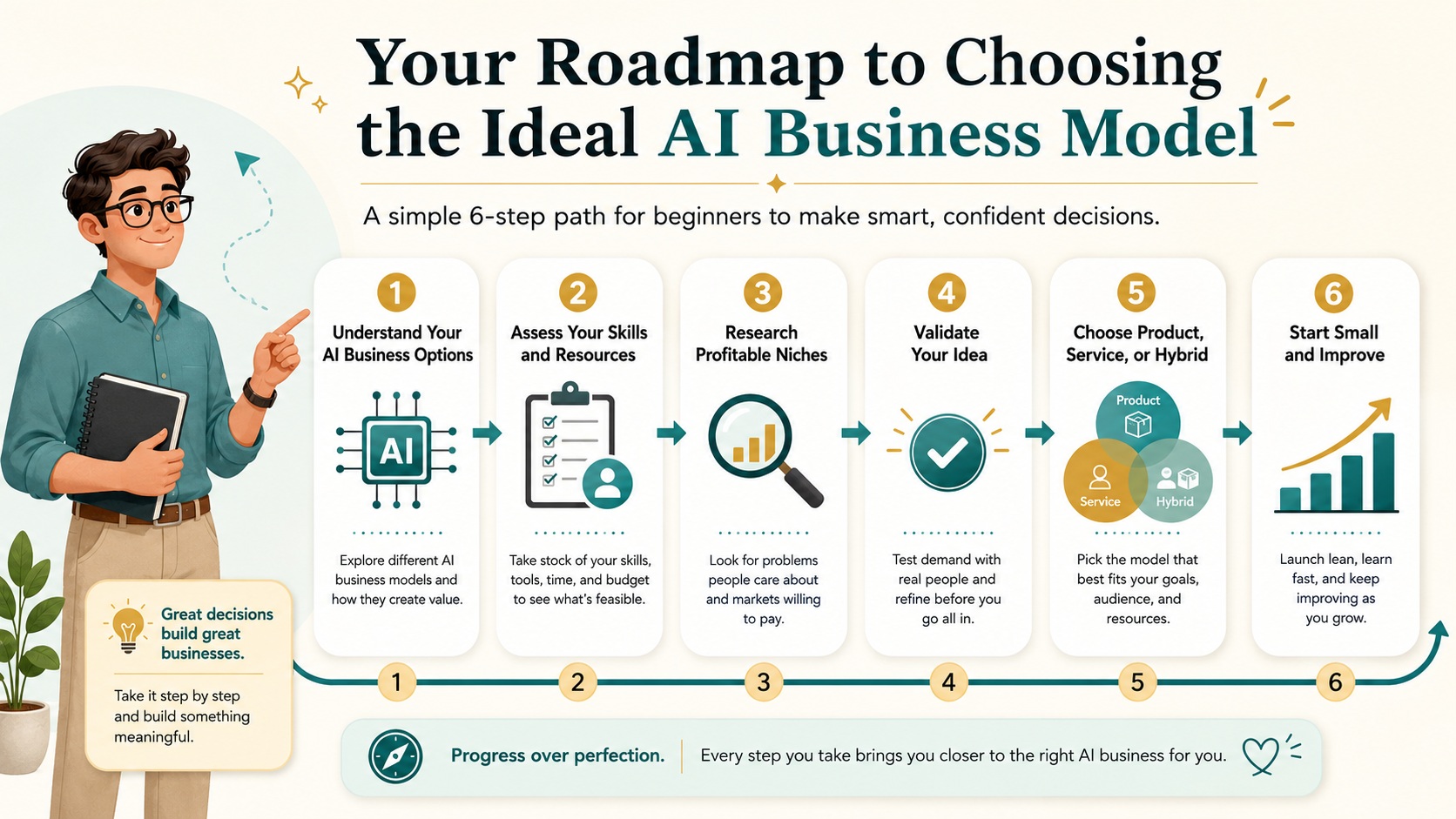
With research done, it’s time to build your AI business model systematically. Start by defining your value proposition: what unique solution are you offering, and why should customers choose you? This clarity will guide all subsequent decisions. Then, outline your revenue streams: how will you make money? Will it be through subscriptions, one-time fees, commissions, or a combination?
Next, identify your target audience. Be as specific as possible. For example, if you’re creating AI tools for seniors, define their age range, tech proficiency, and common challenges. This specificity helps in tailoring your marketing and product development. Create customer personas to keep your focus sharp and ensure you’re always addressing real needs.
Develop a marketing strategy. How will you reach your audience? Content marketing, social media, email campaigns, and partnerships are all effective channels. Since you’re likely working with a budget, start with low-cost methods like blogging or engaging in relevant online communities. As you grow, you can invest in paid advertising or SEO to expand your reach. Remember, consistency in marketing is key to building trust and visibility.
Plan your operations. What tools and processes will you use to deliver your product or service? For product-based models, this might involve development platforms, hosting, and customer support systems. For services, you’ll need scheduling software, communication tools, and project management apps. Keep things simple initially to avoid overcomplicating your setup. As you scale, you can automate and optimize your operations for efficiency.
Finally, set measurable goals and KPIs to track your progress. These could include monthly revenue, customer acquisition costs, or satisfaction scores. Regularly review these metrics to see what’s working and what needs adjustment. Building a business is iterative, so be prepared to adapt your model based on performance data and feedback.
Starting Small and Scaling
Don’t feel pressured to launch everything at once. Start with a minimal version of your business model and improve it over time. This approach reduces risk and allows you to learn from real-world experience. As you gain traction, you can reinvest profits into expanding your offerings or marketing efforts.
Implementing AI Tools and Digital Products
Implementation is where your planning comes to life. If you’re focusing on AI tools or digital products, this phase involves development, testing, and iteration. Choose the right tools for creation; for example, if you’re building a chatbot, platforms like Dialogflow offer user-friendly interfaces that don’t require deep coding knowledge. Similarly, for content generation, tools like GPT-based APIs can be integrated into your products.
Prioritize user experience, especially if your target audience includes beginners or seniors. Ensure your product is intuitive, with clear instructions and support options. Test it with real users to identify any usability issues early on. Feedback during this stage is crucial for refining your offering and ensuring it meets customer expectations.
For service-based implementation, focus on delivering exceptional value to your clients. Use AI tools to enhance your services, such as automating routine tasks or providing data-driven insights. This not only improves efficiency but also demonstrates the power of AI to your customers. Document your processes to maintain consistency and quality as you take on more clients.
Marketing your implementation is equally important. Showcase case studies, testimonials, or demos to build credibility. If you’ve created a digital product, offer a free trial or freemium version to attract users. For services, provide a clear portfolio of past work to illustrate your capabilities. Leverage content marketing by writing blog posts or creating videos that highlight how your AI solution solves specific problems.
Monitor performance and gather data on how users interact with your implementation. Use analytics tools to track engagement, conversion rates, and customer feedback. This data will inform future updates and help you stay aligned with market needs. Remember, implementation is not a one-time event but an ongoing process of improvement and adaptation.
Ensuring Accessibility
Make sure your AI tools or services are accessible to everyone, including those with limited tech experience. Provide tutorials, FAQs, and responsive customer support to help users get the most out of your offering. This inclusivity can be a significant competitive advantage, particularly when targeting demographics like seniors.
Joining The Opportunity Lab Community
Building an AI business can feel isolating, but you don’t have to do it alone. Communities like The Opportunity Lab offer incredible support, resources, and networking opportunities. I’ve found that being part of a community accelerates learning and provides motivation during challenging times. These groups often host webinars, workshops, and forums where you can ask questions and share experiences.
In such communities, you can connect with like-minded individuals who are also navigating the AI landscape. This networking can lead to collaborations, partnerships, or even mentorship opportunities. For example, you might find a tech partner to help with development or a marketing expert to boost your visibility. The collective knowledge and encouragement available in these spaces are invaluable for both personal and professional growth.
Many communities offer exclusive resources, such as templates, toolkits, or discounts on AI software. These perks can save you time and money while giving you access to proven strategies. Additionally, participating in community challenges or events can provide structure and accountability, helping you stay on track with your business goals.
To get started, look for online communities focused on AI entrepreneurship or digital business. Engage actively by contributing to discussions, asking for feedback, and offering help to others. This reciprocity builds strong relationships and establishes your reputation within the group. Over time, you’ll find that the support you receive far outweighs the effort you put in.
If you’re specifically interested in AI tools for seniors or beginner-friendly approaches, seek out niche communities that cater to those interests. These targeted groups can provide more relevant insights and connections. Remember, the right community can be a gamechanger in your journey to selecting and succeeding with your AI business model.
Benefits of Community Support
Beyond practical resources, communities offer emotional support and inspiration. Hearing success stories and overcoming challenges together can keep you motivated and focused on your long-term vision. Don’t underestimate the power of having a cheerleader squad as you build your business.
Avoiding Common Mistakes in AI Business Model Selection
Even with careful planning, it’s easy to fall into common pitfalls when selecting an AI business model. Awareness of these mistakes can help you avoid them and set yourself up for success. One major error is choosing a model based solely on trends without considering your own fit. Just because something is popular doesn’t mean it’s right for you. Always circle back to your skills, resources, and interests before deciding.
Another mistake is underestimating the time and effort required. AI businesses, especially product-based ones, often take longer to become profitable than anticipated. Be realistic about your timeline and prepare for a marathon, not a sprint. This mindset will help you stay persistent through initial challenges.
Ignoring market validation is a critical oversight. I’ve seen entrepreneurs invest heavily in an idea only to find there’s no demand. Always test your concept with a small audience first. Use methods like pre-orders, surveys, or pilot programs to confirm interest before full commitment. This step can save you from costly missteps.
Overcomplicating your model too early is another common issue. Start simple and focus on doing one thing well before expanding. Adding too many features or services initially can dilute your efforts and confuse customers. Keep your offering clear and focused, especially when you’re just beginning.
Lastly, neglecting continuous learning and adaptation can hinder growth. The AI field changes fast, so what works today might not tomorrow. Stay curious and open to pivoting your model based on new technologies, customer feedback, or market shifts. Regularly reassess your approach to ensure it remains relevant and effective.
By steering clear of these mistakes, you’ll increase your chances of building a sustainable and profitable AI business. Remember, every entrepreneur makes errors; the key is to learn from them and keep moving forward with resilience and adaptability.
Staying Flexible and Adaptive
Embrace flexibility in your business model. Be willing to tweak or even overhaul your approach based on real-world results. This agility allows you to respond to opportunities and challenges effectively, ensuring long-term success in the dynamic AI industry.
Selecting the ideal AI business model is a journey that blends self-assessment, research, and practical implementation. By understanding different models, evaluating your own resources, and learning from others, you can find a path that aligns with your goals. Remember to start small, stay adaptable, and leverage communities for support. Whether you’re creating AI tools for seniors or launching a full-scale product, the key is to take that first step and keep iterating. You’ve got this and I’m excited to see where your AI business journey takes you!
Also recently launched – AI-Powered Business Launch
To see the full system:
 Read:
Read:
Systeme.io Review: All-in-One Business Platform
A Comprehensive Guide to Developing Your AI Business Model
A Comprehensive Guide to Implementing AI-Powered Online Business Models
5 Easy AI Business Models for New Entrepreneurs
AI business models for beginners – An Implementation Guide
Top 10 Innovative AI Business Ideas to Kickstart Today
📅 Last updated:
