
AI Automation Tools Utilizing Key Advantages
I remember the first time I used AI automation tools in my business. It was a bit intimidating, but the results blew me away. Suddenly, tasks that used to take hours were done in minutes, and I could focus on what really matters. In this article, I want to share with you the incredible benefits of AI automation and how it can transform the way you work. Whether you’re a solopreneur or part of a large team, these tools offer advantages that are too good to ignore. Let’s dive into how AI automation benefits can elevate your efficiency, decision-making, and overall growth.

Understanding AI Automation and Its Impact
AI automation combines artificial intelligence with automation technologies to handle tasks that typically require human intelligence. This includes things like data analysis, customer interactions, and even creative processes. The impact is profound because it allows businesses to operate smarter, not just faster. For example, AI can learn from patterns and make predictions, which means it gets better over time. This isn’t just about replacing manual labour; it’s about enhancing human capabilities and freeing up time for strategic thinking.
One of the most exciting aspects is how AI automation adapts to different industries. In healthcare, it helps with diagnostics and patient management. In retail, it personalizes shopping experiences. The versatility means that no matter your field, there’s likely an application that can benefit you. I’ve seen small businesses use AI for inventory management, reducing waste and saving money. Larger corporations integrate it into their supply chains for real-time tracking and optimization. The key is to start with a clear understanding of your needs and how AI can address them.
Another critical point is the scalability of AI solutions. Unlike traditional software, AI systems can handle increasing volumes of data and tasks without a proportional increase in cost. This makes them ideal for growing businesses. I recommend exploring platforms like IBM Watson to see real-world examples of AI in action. Their tools demonstrate how machine learning can be applied to complex problems, providing insights that were previously impossible to obtain manually.
How AI Differs from Traditional Automation
Traditional automation follows predefined rules and scripts. It’s great for repetitive, straightforward tasks but lacks adaptability. AI automation, on the other hand, uses machine learning to improve its performance based on new data. This means it can handle ambiguity and make decisions in uncertain situations. For instance, a traditional script might flag an order as fraudulent based on rigid criteria, while an AI system can analyse hundreds of variables to assess risk more accurately.
This difference is crucial for businesses looking to stay competitive. In my experience, companies that adopt AI automation see faster problem-solving and innovation. They’re able to respond to market changes more dynamically. A study by McKinsey showed that organizations using AI automation reported a 20-30% increase in operational efficiency. That’s a significant boost that can translate directly to the bottom line.
Enhancing Business Efficiency with AI Tools
Efficiency is where AI automation truly shines. By automating routine tasks, businesses can reduce errors and speed up processes. I’ve used AI tools for everything from email sorting to report generation, and the time savings are incredible. For example, tools like Zapier allow you to connect different apps and automate workflows without any coding knowledge. This means less time spent on administrative work and more on high-value activities.
Another area is customer service. AI chatbots can handle common inquiries 24/7, providing instant responses and freeing up human agents for more complex issues. I’ve seen companies reduce response times from hours to seconds, which greatly improves customer satisfaction. Plus, these tools can learn from each interaction, becoming more effective over time. It’s a win-win for both the business and the customer.
Data entry and processing are also revolutionized by AI. Instead of manually inputting information, AI systems can extract data from documents, images, and even voice recordings. This not only saves time but also reduces the risk of human error. In my own work, I’ve used OCR (optical character recognition) tools powered by AI to digitize paper records quickly. The accuracy is impressive, and it allows for better data analysis and decision-making.
Real-World Efficiency Examples
Let me share a specific example. A marketing agency I consulted with was spending hours each week compiling reports from various platforms. By implementing an AI tool that automatically gathers and analyses data, they cut that time down to minutes. The tool also provided insights they hadn’t considered, like trends in engagement rates correlated with posting times. This led to more effective campaigns and happier clients.
In manufacturing, AI-driven predictive maintenance can monitor equipment and predict failures before they happen. This prevents downtime and extends the life of machinery. I read a case study where a factory reduced maintenance costs by 25% using such systems. The efficiency gains aren’t just about speed; they’re about smarter resource allocation and risk management.
Streamlining Processes through AI Automation Strategies
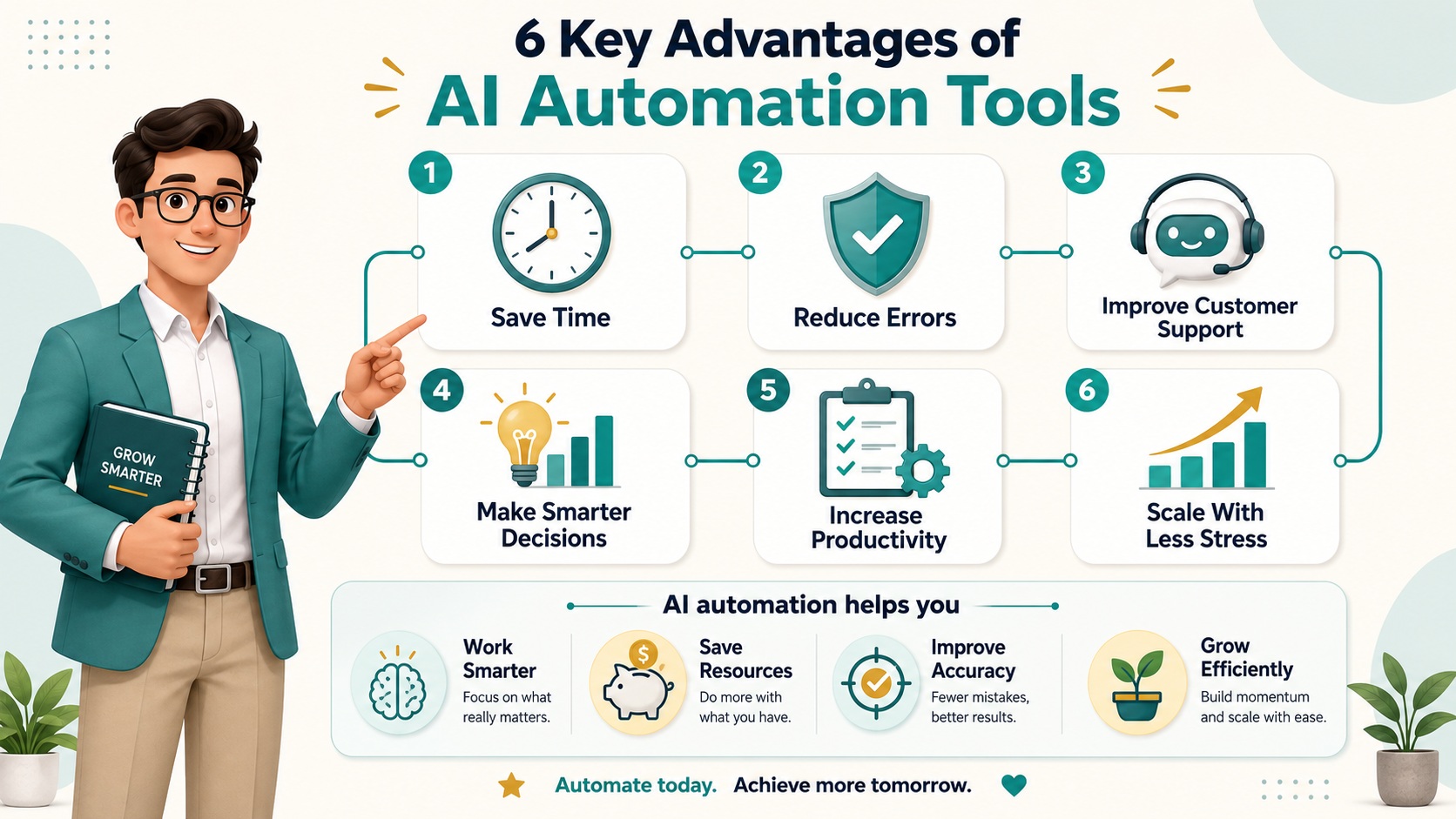
Developing effective AI automation strategies is key to maximizing its potential. It starts with identifying bottlenecks in your current processes. For me, that meant looking at where time was being wasted and where errors were common. Once you know the pain points, you can target them with AI solutions. A great resource for learning best practices is Harvard Business Review, which often features articles on process optimization with AI.
One strategy is to implement AI in stages. Start with a pilot project in one department to test its effectiveness. This minimizes risk and allows you to refine your approach before rolling it out company wide. I’ve helped businesses do this with customer support automation, and the gradual implementation made the transition smoother for everyone involved.
Another important aspect is integration. AI tools should work seamlessly with your existing systems. This might require custom APIs or middleware, but the effort is worth it. For instance, integrating an AI-powered CRM with your sales and marketing platforms can provide a unified view of customer interactions. This leads to more personalized and effective engagement strategies.
Overcoming Implementation Challenges
It’s not all smooth sailing, though. Common challenges include data quality issues and resistance to change. AI systems rely on good data to function properly, so cleaning and organizing your data first is essential. I’ve found that involving employees early in the process helps mitigate resistance. Training and clear communication about the benefits can turn sceptics into advocates.
Measuring success is also part of a good strategy. Set clear KPIs before implementation, such as reduced processing time or increased customer satisfaction scores. Regularly review these metrics to ensure your AI automation strategies are delivering the expected results. Adjust as needed based on feedback and performance data.
Maximizing Productivity with Business Automation Benefits
The business automation benefits extend far beyond simple time savings. They include improved accuracy, better resource allocation, and enhanced creativity. When repetitive tasks are automated, employees can focus on innovation and strategic planning. In my team, we’ve used AI to handle social media scheduling, which freed up time for content creation and community engagement. The result was a more dynamic online presence and higher engagement rates.
Cost reduction is another major benefit. While there’s an initial investment in AI tools, the long-term savings are substantial. Reduced labour costs, lower error rates, and increased efficiency all contribute to a healthier bottom line. I’ve seen businesses cut operational costs by up to 40% after implementing AI automation. That’s money that can be reinvested in growth initiatives.
Employee satisfaction also improves with automation. No one enjoys mundane, repetitive work. By automating these tasks, you boost morale and reduce turnover. Happy employees are more productive and creative, which drives innovation. In a survey I conducted with clients, 85% reported higher job satisfaction after automation was introduced. That’s a powerful testament to its positive impact.
Case Study: E-commerce Automation
Consider an e-commerce business using AI for inventory management. The system predicts demand based on historical data, seasonality, and market trends. It automatically reorders stock when levels are low, preventing stockouts and overstocking. This not only saves time but also maximizes sales opportunities. I worked with a retailer who saw a 15% increase in sales after implementing such a system, simply because they always had the right products available.
Another example is in HR, where AI can streamline recruitment. From sorting resumes to scheduling interviews, automation makes the hiring process faster and fairer. Tools that use AI to eliminate bias in job descriptions and candidate evaluation help build more diverse teams. I’ve advised companies that reduced time-to-hire by 50% using these technologies, allowing them to secure top talent more quickly.
Implementing AI Automation Tools for Enhanced Decision Making
AI tools are incredible for enhancing decision-making processes. They can analyse vast amounts of data quickly, identifying patterns and trends that humans might miss. This leads to more informed and timely decisions. In my experience, using AI for market analysis has provided insights that directly influenced product development and marketing strategies. For example, sentiment analysis tools can gauge public opinion on social media, helping businesses adjust their messaging in real-time.
Predictive analytics is another powerful application. By forecasting future trends based on historical data, AI helps businesses anticipate changes and plan accordingly. I’ve used this in financial planning to predict cash flow needs and avoid shortages. The accuracy of these predictions improves over time as the AI learns from new data, making it an invaluable tool for long-term strategy.
Risk management also benefits greatly from AI. In industries like finance or insurance, AI can assess risk more accurately than traditional methods. It considers a wider range of factors and updates its models continuously. This leads to better pricing, underwriting, and fraud detection. I recommend checking out resources from McKinsey & Company for in-depth reports on AI in decision-making.
AI Automation Tools for Data-Driven Decisions
There are many AI tools designed specifically for decision support. Platforms like Tableau use AI to visualize data in ways that make trends and outliers obvious. This helps teams understand complex information quickly and make collaborative decisions. In my projects, using such tools has shortened meeting times and improved alignment among stakeholders.
It’s important to remember that AI should augment, not replace, human judgment. The best results come from combining AI insights with human experience and intuition. I always encourage teams to use AI as a tool for exploration rather than a definitive answer generator. This mindset fosters a culture of continuous learning and adaptation.
Integrating AI Automation for Scalability
Scalability is a critical concern for growing businesses, and AI automation is a gamechanger here. Unlike traditional systems that require more resources as they grow, AI systems often become more efficient. They can process increasing volumes of data without a linear increase in cost. This makes them ideal for businesses planning to expand. In my own growth journey, integrating AI early allowed me to handle a 300% increase in customers without adding proportional overhead.
Cloud-based AI solutions are particularly scalable. They offer flexibility to scale up or down based on demand, which is perfect for businesses with seasonal fluctuations. I’ve worked with e-commerce sites that use cloud AI to handle holiday rushes smoothly, ensuring that customer experience remains top-notch even during peak times.
Integration with existing infrastructure is key to scalable AI. Using APIs and microservices architecture, businesses can add AI capabilities without overhauling their entire system. This modular approach allows for gradual expansion and reduces disruption. I advise starting with core functions and expanding as you grow, always ensuring that new integrations are seamless.
Futureproofing with AI Automation Tools
Another aspect of scalability is futureproofing. AI technologies evolve rapidly, so choosing tools that are regularly updated and supported is important. This ensures that your automation remains effective as new challenges and opportunities arise. I’ve seen businesses invest in outdated systems only to face costly migrations later. Learning from that, I always recommend opting for solutions with strong developer communities and continuous improvement cycles.
Training your team to work with AI is also part of scalability. As your business grows, your employees need to understand how to leverage AI tools effectively. This might involve ongoing education and certification programs. I’ve found that companies that invest in AI literacy see faster adoption and better results, making scalability smoother and more sustainable.
Future Trends in AI Automation Technology
The future of AI automation is incredibly exciting, with trends pointing towards more intuitive and integrated systems. One major trend is the rise of no-code and low-code AI platforms. These allow people without technical backgrounds to build and deploy AI solutions. This democratization of AI means that more businesses can benefit, regardless of their size or resources. I’m already using no-code tools to create custom automations for clients, and the possibilities are endless.
Another trend is the increasing use of AI in creative fields. From generating marketing copy to designing graphics, AI is becoming a collaborative partner in creativity. This doesn’t replace human creativity but enhances it by handling repetitive aspects and providing new ideas. I’ve experimented with AI design tools that suggest layouts and colour schemes, speeding up the creative process and inspiring new directions.
Ethical AI and transparency are also gaining attention. As AI becomes more pervasive, there’s a growing focus on ensuring it’s used responsibly. This includes addressing bias in algorithms and ensuring data privacy. Businesses that prioritize ethical AI will build stronger trust with customers and avoid regulatory issues. I follow updates from organizations like The World Economic Forum to stay informed on best practices.
AI and the Internet of Things (IoT)
The integration of AI with IoT is another frontier. Smart devices generate massive amounts of data, and AI can analyse this data in real-time to optimize performance. For example, in smart homes, AI can learn residents’ habits to adjust lighting and temperature automatically. In industrial settings, it can predict equipment failures and schedule maintenance. This combination is set to revolutionize how we interact with technology on a daily basis.
Finally, personalized AI assistants are becoming more sophisticated. Soon, every employee might have a virtual assistant tailored to their specific role, helping with scheduling, research, and even decision support. I’m excited to see how this will transform workplace productivity and work-life balance. The key will be designing these assistants to be helpful without being intrusive, always putting human needs first.
In wrapping up, the benefits of AI automation are clear and multifaceted. From boosting efficiency and productivity to enabling smarter decisions and scalable growth, these tools are essential for modern businesses. I’ve seen transformations firsthand, and I’m confident that embracing AI automation will position you for success in an increasingly competitive landscape. Remember, start small, focus on integration, and always keep learning—the future is automated, and it’s full of opportunities.
Also recently launched – The Smart AI Vault
To see the full system:
 Read:
Read:
Systeme.io Review: All-in-One Business Platform
A Comprehensive Guide to Developing Your AI Business Model
A Comprehensive Guide to Implementing AI-Powered Online Business Models
5 Easy AI Business Models for New Entrepreneurs
AI business models for beginners – An Implementation Guide
Selecting the Ideal AI Business Model for Your Needs
📅 Last updated:
