
AI Automation Techniques for Enhancing Your Side Business
Hey there, fellow side hustler. I know how it feels to juggle a full-time job, family, and that passion project you are trying to grow into something more. It is exhausting, right. But what if I told you there is a way to work smarter, not harder. AI automation techniques are changing the game for entrepreneurs like us. They can handle repetitive tasks, analyse data in seconds, and even help you make better decisions. In this guide, I will walk you through the best AI automation strategies to boost your side business and increase your online income generation. Let us dive in and explore how you can optimize your efforts efficiently.

Understanding AI Automation and Its Benefits
Before we get into the nitty-gritty, let us clarify what AI automation really means. In simple terms, it is the use of artificial intelligence to perform tasks without human intervention. These tasks can range from sending emails to analysing customer data. The goal is to free up your time so you can focus on what truly matters, growing your business. I have seen firsthand how these AI automation techniques can transform a side hustle from a time sink into a profitable venture.
One of the biggest benefits is the sheer time savings. Imagine not having to manually respond to every customer inquiry or update your social media posts. AI can handle that for you, 24/7. Another advantage is accuracy. Humans make mistakes, especially when tired or overwhelmed. AI systems, on the other hand, perform consistently. This reduces errors in tasks like data entry or inventory management.
Scalability is another key benefit. As your side business grows, so do the demands on your time. AI automation allows you to handle increased workload without proportional increases in effort. For example, an AI chatbot can manage hundreds of customer interactions simultaneously, something impossible for one person. This scalability is crucial for online income generation, as it lets you serve more customers without burning out.
Cost efficiency is also a major plus. While there might be an initial investment in tools or setup, the long-term savings are significant. You will spend less on manual labour and reduce operational costs. Plus, many AI tools offer affordable subscription models perfect for side businesses. I remember when I started using AI for my email marketing, it cut my time spent on campaigns by half, allowing me to reinvest those hours into product development.
Lastly, AI provides valuable data insights. It can analyse patterns and trends that you might miss. This helps in making informed decisions to enhance your strategies. For instance, AI can predict which products will sell best based on past data, helping you stock inventory wisely. These insights are gold for anyone serious about side business enhancement.
Real-World Example: E-commerce Store Automation
Let me share a quick example. A friend runs a small online store selling handmade crafts. She was spending hours each week updating product listings and responding to queries. After implementing AI tools for inventory management and customer service, her sales increased by 30% in three months. She now uses that extra time to create new products, further boosting her income. This is the power of effective AI automation techniques in action.
Choosing the Right AI Tools for Your Side Business
Selecting the appropriate AI tools can feel overwhelming with so many options available. But do not worry, I am here to help you navigate this. The key is to match the tool to your specific needs and budget. Start by identifying the areas where you spend the most of your time. Is it customer service, marketing, or data analysis. Once you know that, you can look for tools that address those pain points.
For customer service, AI chatbots are a game-changer. Tools like ManyChat or Drift can handle common queries, book appointments, and even process orders. They integrate easily with platforms like Facebook Messenger or your website. I use one for my coaching business, and it has reduced my response time from hours to seconds. This immediacy improves customer satisfaction and frees me up for high-value tasks.
When it comes to marketing, AI-powered platforms can optimize your campaigns. Tools such as HubSpot or Marketo use AI to personalize email content, segment audiences, and predict the best send times. This increases engagement and conversion rates. For content creation, AI writers like Jasper or Copy.ai can generate blog posts, social media captions, and ad copy. They are not perfect, but they provide a solid foundation that you can refine.
Data analysis is another area where AI excels. Platforms like Google Analytics with AI features or specialized tools like Tableau can uncover insights from your data. They help you understand customer behaviour, track sales trends, and identify opportunities for growth. For my side business, using AI for analytics revealed that my audience engages most with video content, prompting a shift in my content strategy that paid off.
Do not forget about operational tools. AI can streamline invoicing, scheduling, and project management. For example, tools like QuickBooks use AI for expense tracking and financial forecasting. Calendly automates appointment scheduling, eliminating back-and-forth emails. These might seem small, but they add up to significant time savings. Always look for tools that integrate well with your existing systems to avoid compatibility issues.
Before committing, take advantage of free trials or demos. Test the tools to see if they fit your workflow. Read reviews and case studies from other small business owners. Remember, the goal is to enhance your side business, not complicate it. Choose tools that are user-friendly and offer good customer service. Investing time in research now will pay dividends later in efficiency and growth.
Budget Considerations
As a side hustler, budget is often tight. Fortunately, many AI tools offer tiered pricing, with basic plans that are affordable. Start with one or two tools that address your biggest pain points. As your business grows and you see ROI, you can scale up. Do not feel pressured to buy the most expensive option, sometimes simpler tools do the job perfectly.
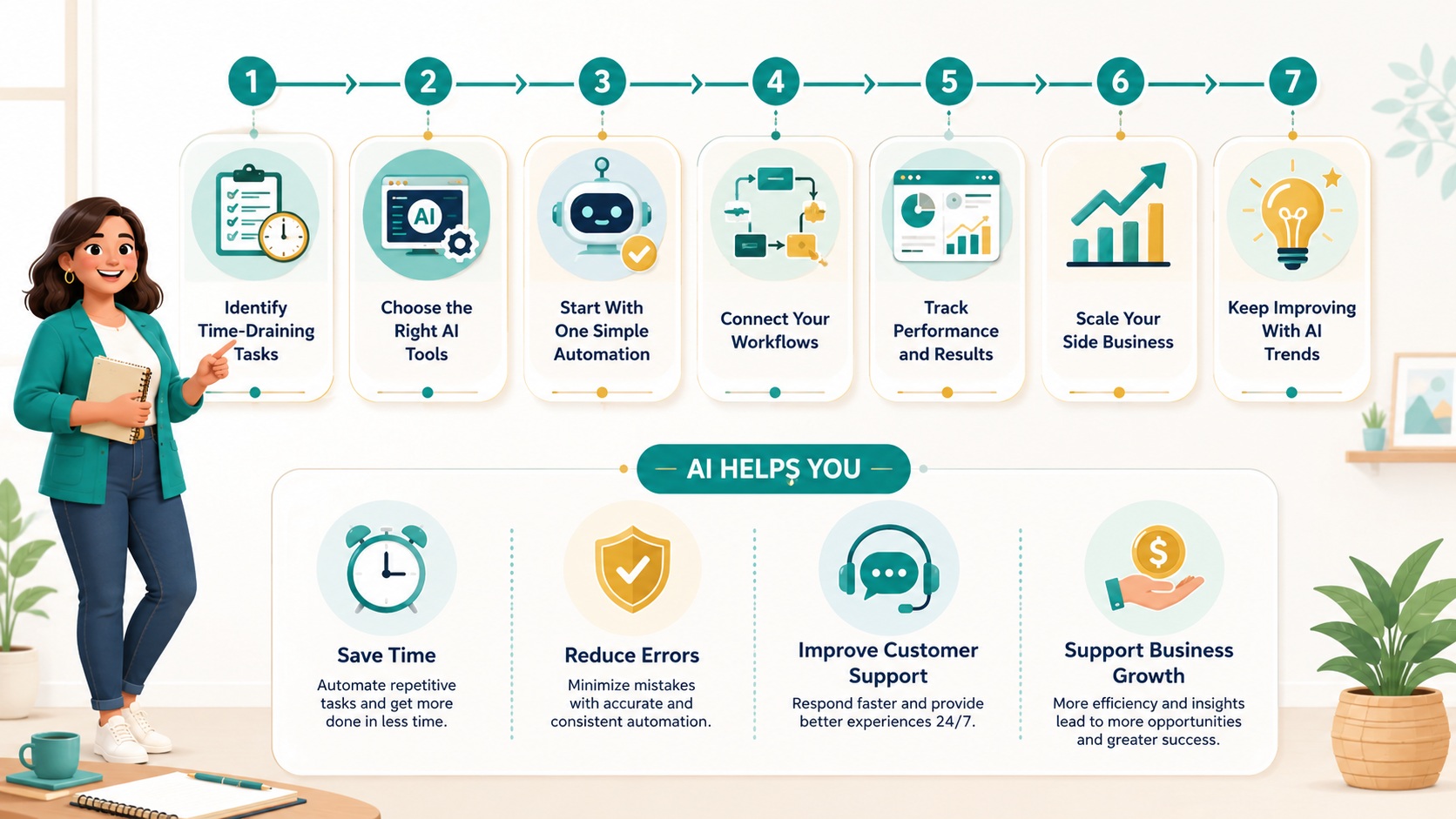
Implementing AI Automation in Your Online Ventures
Now that you have chosen your tools, it is time to implement them. This step is crucial, as poor implementation can lead to frustration instead of benefits. Start small, do not try to automate everything at once. Pick one area, such as email marketing or social media posting, and focus on getting it right. This approach minimizes risk and allows you to learn as you go.
Begin by setting clear objectives. What do you want to achieve with automation. Is it to save time, increase sales, or improve customer engagement. Having clear goals will guide your implementation process. For instance, if your goal is to reduce time spent on social media, you might implement a tool like Buffer or Hootsuite that schedules posts automatically using AI to suggest the best times for engagement.
Integration is key. Ensure your AI tools work seamlessly with your existing software. Most tools offer integrations with popular platforms like Shopify, WordPress, or Salesforce. Take the time to set up these integrations properly. I learned this the hard way when I rushed integration and faced data sync issues. A smooth integration ensures data flows correctly between systems, maximizing efficiency.
Training and customization are also important. Even though AI is automated, it often needs initial setup tailored to your business. For example, an AI chatbot needs to be trained on common questions and responses specific to your niche. Spend time customizing templates and workflows to match your brand voice and processes. This personalization makes the automation feel more natural to your customers.
Monitor the initial performance closely. Keep an eye on metrics like time saved, error rates, or customer feedback. Be prepared to tweak settings as needed. AI is not set-and-forget, it requires ongoing adjustment to stay effective. I recommend setting up a weekly review session to assess how your automation is performing and make improvements.
Do not overlook the human touch. While AI can handle many tasks, some things still require a personal approach. Use automation for repetitive, time-consuming tasks, but stay involved in areas that need creativity or empathy. For instance, let AI handle initial customer inquiries, but step in for complex issues. This balance ensures your business remains personal and responsive.
Case Study: Content Creation Automation
I helped a client automate their blog content process. They used an AI writer to generate draft posts based on keywords, then edited and optimized them manually. This cut their content creation time by 60%, allowing them to publish more frequently. As a result, their website traffic increased by 40% in six months. This shows how strategic implementation of AI automation techniques can drive tangible results.
Maximizing Efficiency Through AI-Powered Systems
Efficiency is the name of the game when it comes to side businesses. AI-powered systems can take your efficiency to the next level by optimizing workflows and reducing manual effort. Let us explore how you can maximize efficiency across different areas of your business using these advanced AI automation strategies.
Start with workflow automation. Tools like Zapier or IFTTT allow you to create automated workflows between different apps. For example, you can set up a zap that adds new email subscribers to your CRM and sends them a welcome message automatically. This eliminates manual data entry and ensures no lead falls through the cracks. I use Zapier to connect my Calendly bookings to my Google Calendar and Trello board, streamlining my entire scheduling process.
Inventory management is another area where AI can boost efficiency. If you sell products, AI systems can predict demand based on historical data, seasonality, and market trends. This helps you maintain optimal stock levels, avoiding both overstock and stockouts. Platforms like TradeGecko or Cin7 offer AI-driven inventory solutions that integrate with e-commerce stores. This not only saves time but also reduces costs associated with poor inventory management.
Customer relationship management (CRM) enhanced with AI can transform how you interact with your audience. AI CRMs like Salesforce Einstein or HubSpot CRM can score leads based on their likelihood to convert, prioritize follow-ups, and even recommend next steps. This ensures you focus your efforts on the most promising opportunities, increasing conversion rates. For my business, using an AI CRM helped me identify high-value clients early, leading to a 25% increase in sales.
Financial management is often a headache for side hustlers. AI tools can automate invoicing, expense tracking, and even tax preparation. For instance, tools like QuickBooks Online use AI to categorize expenses and generate financial reports. This not only saves time but also provides insights into your cash flow and profitability. Automating finances reduces errors and ensures you stay on top of your numbers without spending hours on spreadsheets.
Do not forget about personal productivity. AI can help you manage your time better. Tools like RescueTime analyse your computer usage and provide insights on how you spend your time, suggesting improvements. Virtual assistants like x.ai can schedule meetings and manage your calendar. By optimizing your personal efficiency, you create more bandwidth to grow your business. Remember, the goal is to work smarter, not harder.
Finally, consider AI for security and fraud prevention. If you handle transactions or sensitive data, AI systems can detect unusual patterns and flag potential fraud. This protects your business and builds trust with customers. Services like Sift or Kount offer AI-driven fraud detection that is affordable for small businesses. Integrating these tools early can prevent costly issues down the line.
Efficiency in Marketing Campaigns
Marketing campaigns can consume a lot of time if done manually. AI can automate A/B testing, ad placement, and audience targeting. For example, Google Ads uses AI to optimize bids and placements for better ROI. By leveraging these AI automation techniques, you can run more effective campaigns with less hands-on effort, allowing you to focus on strategy and creativity.
Measuring Success: Tracking and Analysing AI Performance
Implementing AI is only half the battle, you need to measure its impact to ensure it is delivering value. Tracking and analysing performance helps you understand what is working, what is not, and where you can improve. Let us dive into the key metrics and methods for evaluating your AI automation efforts.
Start by defining key performance indicators (KPIs) aligned with your goals. Common KPIs for AI automation include time saved, cost reduction, error rate decrease, and revenue increase. For example, if you automated customer service, track metrics like average response time, resolution rate, and customer satisfaction scores. These numbers will show you the tangible benefits of your investment.
Use analytics tools to gather data. Most AI platforms come with built-in analytics dashboards. For instance, chatbot tools provide reports on conversation volume, resolution rates, and user satisfaction. E-commerce platforms like Shopify offer insights into sales trends and customer behaviour. Make it a habit to review these reports regularly. I set aside time each month to analyse my AI tools performance, which helps me make data-driven decisions.
Do not just look at quantitative data, qualitative feedback is equally important. Survey your customers to get their thoughts on automated interactions. Are they satisfied with the chatbot responses. Do they find the automated emails helpful. This feedback can reveal areas for improvement that numbers alone might miss. I once tweaked my AI email responses based on customer feedback, which led to higher engagement rates.
Compare performance before and after implementation. This gives you a clear picture of the impact. For example, if you automated social media posting, compare engagement metrics from before and after. Did likes, shares, or comments increase. This before-and-after analysis is powerful for demonstrating ROI to yourself or any stakeholders.
Be prepared to iterate. AI is not perfect, and you may need to adjust your approach based on performance data. If a certain automation is not delivering expected results, dig into why. Maybe the tool needs better training, or perhaps it is not the right fit for your audience. Continuous improvement is key to long-term success with AI automation techniques.
Finally, consider the broader impact on your business. Beyond immediate metrics, think about how AI has affected your work-life balance, creativity, and ability to scale. For many side hustlers, the biggest win is reclaiming time for strategic thinking or personal life. These intangible benefits are just as important as the quantitative ones.
Using AI for Predictive Analysis
Advanced AI tools can even help with predictive analysis, forecasting future trends based on current data. This allows you to proactively adjust your strategies. For instance, if AI predicts a dip in sales, you can ramp up marketing efforts ahead of time. Leveraging predictive analytics is a sophisticated way to stay ahead of the curve in your side business enhancement journey.
Another great resource is this Entrepreneur piece on AI for small businesses, which offers additional insights and case studies.
Scaling Your Side Business with AI Automation
Scaling a side business can be daunting, but AI automation makes it achievable by handling increased workload efficiently. Let us explore how you can use AI to scale your operations, reach more customers, and boost your online income generation without proportional increases in effort.
First, focus on customer acquisition. AI can optimize your advertising campaigns to reach a broader audience at lower costs. Platforms like Facebook Ads Manager use AI to target users most likely to convert, maximizing your ad spend. Additionally, AI-driven content tools can help you produce more content to attract organic traffic. For example, using an SEO tool like Surfer SEO with AI capabilities can optimize your blog posts for higher search rankings, driving more visitors to your site.
Next, consider AI for sales conversion. Chatbots and AI CRMs can nurture leads automatically, sending personalized follow-ups based on user behavior. This ensures that no lead is forgotten, increasing conversion rates as you scale. I have seen businesses double their sales by implementing AI lead nurturing sequences that engage prospects at the right time with the right message.
Operational scaling is another critical area. As order volume increases, AI can automate order processing, shipping notifications, and inventory updates. This prevents bottlenecks and ensures smooth operations. For instance, tools like ShipStation use AI to choose the best shipping carriers and rates, saving time and money. This efficiency allows you to handle more orders without hiring additional staff prematurely.
Do not overlook customer support scaling. AI chatbots can handle a growing number of inquiries without compromising quality. They can also escalate complex issues to human agents when necessary. This hybrid approach ensures that customer satisfaction remains high as your business grows. For my side business, scaling support with AI meant I could handle a 200% increase in customers without increasing support costs proportionally.
Finally, use AI for strategic decision-making. As you scale, decisions become more complex. AI analytics tools can process large datasets to provide insights on market trends, customer preferences, and operational efficiencies. This data-driven approach reduces guesswork and helps you make informed choices that support sustainable growth. Remember, scaling is not just about getting bigger, it is about getting better.
Leveraging AI for Global Expansion
If you are considering international markets, AI can help with language localization, currency conversion, and cultural adaptation. Tools like Unbabel use AI for translation and customer support in multiple languages, making global expansion more accessible for small businesses. This opens up new revenue streams and diversifies your online income generation.
Overcoming Common Challenges in AI Implementation
While AI offers immense benefits, it is not without challenges. Many side hustlers face obstacles when implementing AI automation techniques. Let us discuss common issues and how to overcome them to ensure a smooth transition.
One major challenge is the initial learning curve. AI tools can be complex, and it takes time to learn how to use them effectively. To overcome this, start with user-friendly tools that offer good documentation and support. Take advantage of tutorials, webinars, and customer service. I spent a weekend learning the basics of my first AI tool, and that investment paid off in long-term efficiency.
Cost concerns are also common. While AI can save money in the long run, upfront costs can be a barrier. Look for tools with free trials or freemium models. Begin with one tool that addresses your biggest pain point, and scale as you see ROI. Many providers offer discounts for annual plans, which can reduce costs further. Do not let cost prevent you from starting, the benefits often outweigh the investment.
Data privacy and security is another hurdle. When using AI, you often share data with third-party platforms. Ensure that any tool you use complies with regulations like GDPR or CCPA. Read privacy policies and choose reputable providers with strong security measures. This protects both your business and your customers.
Integration issues can arise if tools do not work well together. Before committing, check integration capabilities and test them during the trial period. If needed, use middleware like Zapier to connect systems that do not integrate directly. This flexibility can solve many compatibility problems.
Finally, resistance to change is a human challenge. You or your team might be hesitant to adopt new technology. Address this by highlighting the benefits and providing training. Start with small, visible wins to build confidence. For example, automate a tedious task first to show how much time can be saved. This positive experience will encourage further adoption.
Staying Updated with AI Trends
AI technology evolves rapidly. To keep your side business competitive, stay informed about new developments. Follow industry blogs, attend webinars, and join communities of like-minded entrepreneurs. This proactive approach ensures you continue to leverage the latest AI automation strategies for ongoing enhancement.
Future Trends in AI Automation for Side Businesses
The world of AI is constantly evolving, and staying ahead of trends can give your side business a competitive edge. Let us explore some emerging AI automation techniques and how they might shape the future of online income generation.
One exciting trend is hyper-personalization. AI is getting better at understanding individual customer preferences and behaviors. Future tools will offer even more personalized experiences, from product recommendations to tailored content. This level of personalization can significantly boost engagement and loyalty for your side business.
Voice and conversational AI are also on the rise. With the growth of smart speakers and voice search, optimizing for voice interactions will become crucial. AI tools that can handle voice commands or generate voice-responsive content will be in high demand. This opens new avenues for customer engagement and convenience.
AI in augmented reality (AR) and virtual reality (VR) is another frontier. For product-based businesses, AR can allow customers to visualize products in their space before buying, enhanced by AI for better accuracy. This immersive experience can drive sales and reduce returns. While still emerging, it is a trend to watch.
Ethical AI and transparency are gaining importance. Consumers are becoming more aware of how their data is used. Future AI tools will likely focus on ethical practices, such as explainable AI that users can understand and trust. Adopting these practices early can build customer trust and differentiate your business.
Finally, AI for sustainability is emerging. Tools that help reduce waste, optimize energy use, or support ethical sourcing are becoming available. For side businesses, this aligns with growing consumer demand for sustainable practices. Integrating such AI can enhance your brand image and appeal to conscious consumers.
By keeping an eye on these trends, you can future-proof your side business and continue to leverage AI for growth. For the latest updates, I recommend following resources like MIT Technology Review.
Conclusion
AI automation techniques are no longer just for big corporations; they are accessible and incredibly valuable for side businesses like yours. From saving time-consuming tasks to providing deep insights, AI can transform how you operate and grow. By choosing the right tools, implementing them strategically, and continuously measuring performance, you can enhance your side business efficiently. Remember, the goal is to work smarter, not harder. Start small, stay curious, and let AI handle the repetitive work so you can focus on what you love. Here is to boosting your online income and taking your side hustle to the next level.
Also recently launched – The Smart Content System
To see the full system:
 Read:
Read:
Systeme.io Review: All-in-One Business Platform
A Comprehensive Guide to Developing Your AI Business Model
A Comprehensive Guide to Implementing AI-Powered Online Business Models
5 Easy AI Business Models for New Entrepreneurs
AI business models for beginners – An Implementation Guide
Selecting the Ideal AI Business Model for Your Needs
📅 Last updated:
