
Discover 6 Cutting-Edge AI Business Models
Artificial intelligence is changing how we build businesses and generate income online. If you’ve been curious about AI business models that are both innovative and profitable, this article is for you. I’ll walk you through six cutting-edge AI business ideas that leverage smart tools and digital products to create simple online income streams. Whether you’re a tech enthusiast or a budding entrepreneur, these models show how AI can power your business strategy in fresh and exciting ways. Ready to explore the possibilities? Let’s dive right in.

Understanding AI in Business
Before jumping into the AI business models, it helps to understand what AI really means in a business context. AI is the simulation of human intelligence by machines, primarily software that can learn, analyze data, and make decisions. Businesses are adopting AI to automate tasks, enhance customer experience, and drive smarter strategies.
For example, chatbots powered by natural language processing are common AI tools in customer support. They can answer questions instantly, freeing up human agents for complex issues. But AI’s role goes far beyond chatbots—machine learning algorithms analyze vast datasets to predict trends, personalized marketing campaigns, and even optimize supply chains.
AI also enables new digital products, such as AI-generated content and virtual assistants, opening doors to innovative income streams. Understanding these fundamentals is key to spotting the right AI business ideas that fit your goals.
One important aspect is accessibility. Many AI tools no longer require deep programming skills. Platforms like OpenAI offer APIs that anyone can integrate into apps or websites. This lowers the barrier to entry and empowers small businesses and solo entrepreneurs to tap into AI’s power.
Moreover, AI’s adaptability means it can be tailored to various industries—from eCommerce to healthcare to entertainment. This versatility is why AI business models are gaining momentum as lucrative online income streams.
Benefits of AI Business Models
Why are so many entrepreneurs and companies turning to AI business ideas? Because the benefits are compelling and varied. Here are some of the top advantages I’ve noticed with AI-driven business models:
- Automation of repetitive tasks: AI handles mundane or data-heavy work, increasing efficiency and reducing errors. For example, AI-powered bookkeeping tools can automatically categorize expenses, saving hours for small business owners.
- Personalized customer experiences: AI algorithms analyze customer behavior to deliver tailored content or product recommendations. This boosts engagement and conversion rates, which are crucial for online businesses.
- Scalability: AI systems can handle growing workloads without proportional increases in costs. Digital products created with AI—like automated courses or content generators—can be replicated endlessly with minimal additional effort.
- Cost-effectiveness: Many AI tools offer subscription-based pricing, making it affordable to experiment and scale. This is ideal for startups and side hustles that want to minimize upfront investments.
- Data-driven insights: AI analytics uncover patterns and opportunities that humans might miss. This allows business owners to pivot quickly and optimize their strategies for better results.
Moreover, AI business models often lead to higher customer satisfaction, because the technology enables faster responses and more relevant solutions. For instance, AI-driven marketing automation platforms can send timely emails based on user actions, increasing open rates and sales.
Ultimately, AI models create new possibilities for online income streams by combining technology with creativity. Smart entrepreneurs use this synergy to carve niches and build sustainable businesses.
AI Business Model Examples
Let’s explore six innovative AI business models that are shaping the future of online entrepreneurship. Each example highlights a unique way to harness AI tools and digital products to generate income.
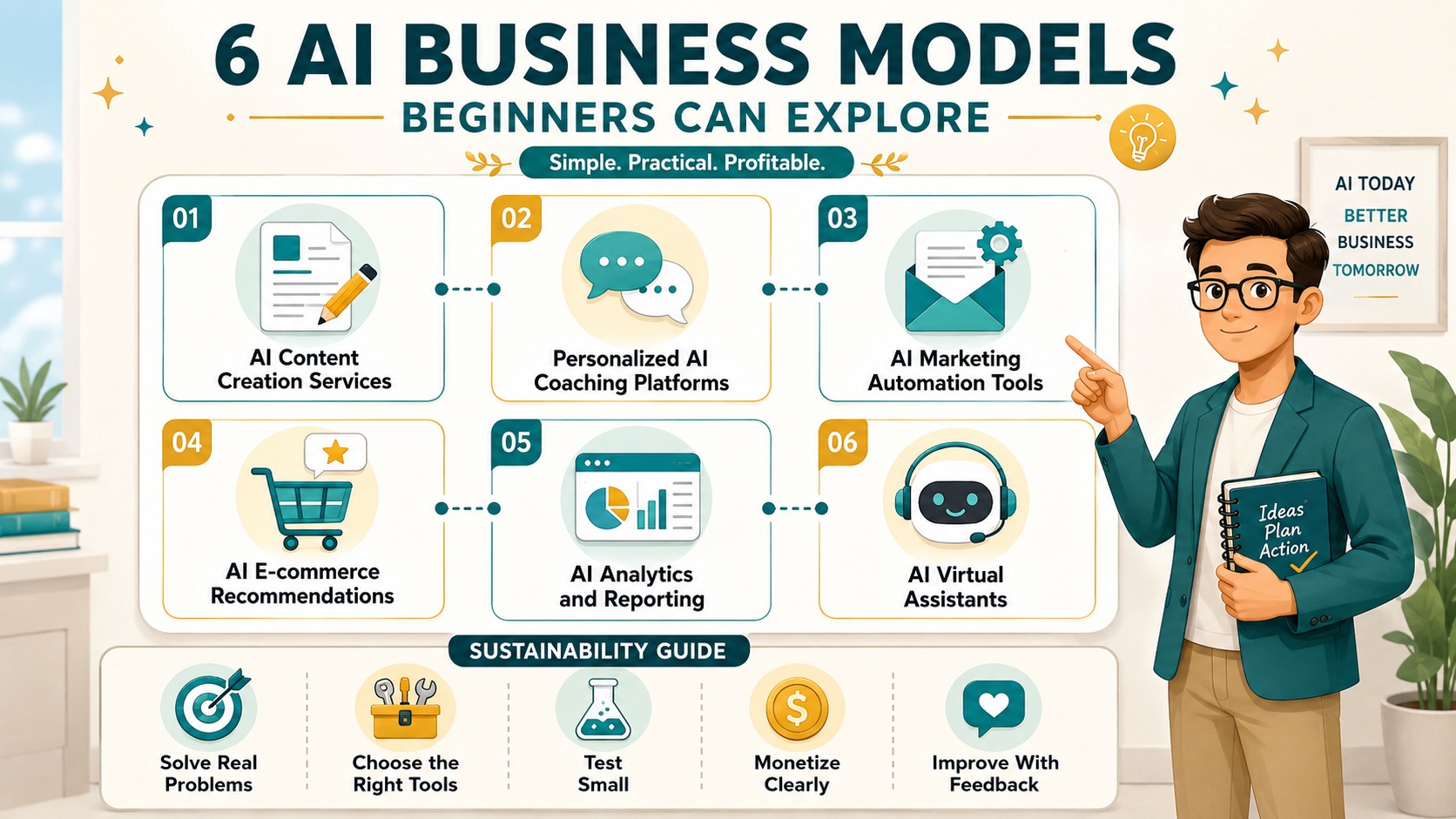
1. AI-Powered Content Creation Services
Content is king—and AI is the new content creator. Using natural language generation tools like GPT-4, businesses can offer fast and high-quality content creation services. This could include blog posts, video scripts, social media captions, or even eBooks.
For example, many agencies now use AI to draft initial content, then refine it with human editors. This blend speeds up turnaround times and lowers costs. Freelancers can also use AI writing assistants to handle more clients efficiently.
2. Personalized AI coaching Platforms
Coaching and training are booming industries. AI can enhance these by delivering personalized learning experiences. Imagine a platform that uses machine learning to analyze your progress and tailor lessons accordingly.
AI coaches can also provide instant feedback via chatbots or voice assistants, making learning interactive and accessible. This model works well for language learning, fitness coaching, or professional skills development.
3. AI-Driven Marketing Automation Tools
Marketing automation platforms powered by AI analyze customer data to optimize campaign targeting and timing. Businesses can sell subscriptions to these tools or offer consulting services to set them up.
Examples include AI email marketing solutions that predict the best send times or recommend content based on user engagement history. This model helps clients boost ROI while creating recurring revenue for providers.
4. AI-Based E-commerce Product Recommendations
Online stores thrive on personalization. Integrating AI recommendation engines can increase average order values by suggesting related products dynamically. Entrepreneurs can build and license such tools to eCommerce businesses.
These AI models learn from browsing patterns and purchase history, constantly improving their suggestions. This creates a win-win: customers find relevant products, and stores increase sales without manual effort.
5. Automated AI Analytics and Reporting Services
Data is overwhelming for many businesses. AI-powered analytics services simplify this by automatically generating insightful reports and forecasts. Providers can offer these as SaaS platforms or white-label solutions.
For example, an AI dashboard might track key performance metrics and alert users to anomalies or growth opportunities. This model appeals to small-to-medium enterprises seeking data-driven decisions without hiring analysts.
6. AI-Enabled Virtual Assistants for Entrepreneurs
Virtual assistants powered by AI handle scheduling, research, and routine communication tasks. Entrepreneurs can create subscription-based apps or offer managed services using these assistants.
These AI assistants learn user preferences over time, becoming more efficient and personalized. The convenience they provide helps busy professionals focus on high-impact activities, making this an attractive online income stream.
Each of these AI business models highlights how technology can be combined with creativity and service to unlock new revenue streams. They also demonstrate the wide range of industries and niches where AI can make a difference.
Implementing AI Tools for Business Success
Having explored the innovative AI models, the next step is understanding how to implement AI tools effectively. The right approach can mean the difference between success and wasted investment.
Choosing the Right AI Business Models Tools
There’s no one-size-fits-all solution. The choice depends on your business niche, goals, and technical skills. For example, if you’re focused on content creation, tools like Jasper AI or Copy.ai might be ideal. For analytics, platforms such as Tableau or Dataiku offer powerful AI capabilities.
It’s important to try demos or free trials to evaluate ease of use and integration capabilities. Many AI services provide APIs, so you can customize them to fit your workflows.
Data Preparation and Training
AI models rely heavily on quality data. Before deploying AI tools, ensure your data is clean, relevant, and well-structured. For example, an AI marketing platform needs historical customer data to generate accurate predictions.
Some AI tools come pre-trained on vast datasets but fine-tuning them with your own data improves performance. This is especially true for specialized niches or languages.
Integrating AI into Existing Systems
Seamless integration is key to realizing AI’s benefits. Whether it’s linking an AI chatbot with your CRM or embedding recommendation engines on your website, the goal is smooth workflows without disruption.
Consider using automation platforms like Zapier or Integromat to connect AI tools with other apps. This reduces manual tasks and creates a cohesive system.
Continuous Monitoring and Improvement
AI isn’t a set-it-and-forget-it solution. Ongoing monitoring helps identify areas for optimization. Track performance metrics regularly and adjust parameters or retrain models as needed.
Gather user feedback to ensure the AI experience meets expectations. Successful AI implementation is an iterative process that evolves with your business.
Monetizing AI-driven Products
Once you’ve developed AI-powered products or services, monetization becomes the priority. Here are some effective strategies I’ve seen work well for AI business models:
- Subscription models: Offer AI tools as monthly or annual subscriptions. This provides predictable recurring revenue and encourages customer retention. For example, AI writing assistants and marketing automation platforms often use this approach.
- Freemium with paid upgrades: Provide a free basic version of your AI product, then upsell advanced features or increased usage. This lowers barriers to entry and builds a user base.
- Consulting and customization: Many businesses want AI but lack expertise. Offering consulting services to implement or customize AI solutions can be lucrative.
- Licensing and white-labeling: Develop AI models that other companies can license or rebrand. This extends your market reach without direct sales effort.
- One-time digital product sales: Sell AI-generated content like eBooks, templates, or course materials. These products can be scaled easily with minimal ongoing costs.
Marketing your AI-driven products effectively is also crucial. Building credibility by showcasing case studies, user testimonials, and transparent data on AI performance helps build trust.
Moreover, combining multiple revenue streams often works best. For example, a company might offer a subscription AI tool alongside personalized coaching or on-demand consulting.
Creating Sustainable Online Income Streams using AI Business Models
Building an AI business that generates sustainable income requires more than just technology. It’s about crafting systems that support long-term growth and customer satisfaction.
Focus on Customer Value
The most successful AI business models solve real problems and deliver tangible value. Whether it’s saving time, increasing sales, or improving user experiences, always prioritize outcomes over flashy features.
Diversify Your Offerings
Relying on a single AI product can be risky. Consider diversifying by developing complementary services or digital products. For example, an AI content platform might add coaching sessions, templates, or premium communities.
Automate and Optimize Systems
Use AI and automation to streamline your operations, marketing, and customer support. This reduces manual workload and allows you to scale without massive overhead.
Build Strong Relationships
Engage with your customers through newsletters, social media, and personalized communication. Loyal customers are more likely to provide referrals and renew subscriptions, creating a stable revenue base.
Invest in Continuous Learning
AI technology evolves rapidly. Stay updated on new tools, algorithms, and business trends. This knowledge helps you adapt and maintain a competitive edge in the market.
AI Integration in Step-by-Step Systems
Implementing AI successfully depends on a structured approach. Here’s a step-by-step system I recommend for integrating AI into your business model:
- Identify pain points or opportunities where AI can add value in your workflow or product.
- Research AI tools and platforms that align with your needs and budget.
- Test AI tools with pilot projects or small-scale experiments.
- Prepare and clean your data to maximize AI performance.
- Deploy AI solutions and integrate them with existing systems.
- Train your team or yourself on using AI tools effectively.
- Monitor results and gather feedback to identify areas for improvement.
- Iterate and optimize your AI implementations regularly.
- Scale successful AI models by automating processes and expanding your offerings.
- Document your systems to ensure consistency and facilitate onboarding.
This systematic approach reduces trial-and-error frustrations and accelerates your path to creating impactful AI business models.
Joining The Opportunity Lab Community for AI Support
Building an AI-driven business can feel overwhelming at times. That’s why joining communities like The Opportunity Lab can be a gamechanger. This community offers resources, expert coaching, and peer support specifically focused on AI and digital business growth.
Within such communities, you can:
- Access curated AI tools and tutorials tailored for entrepreneurs.
- Receive personalized coaching on implementing AI business models.
- Network with like-minded professionals and share lessons learned.
- Stay updated on emerging AI trends and opportunities.
- Get accountability and motivation to keep progressing.
Being part of a supportive network accelerates your learning curve and opens doors to collaborations you might not find otherwise. Plus, it keeps you inspired as you navigate the exciting world of AI business ideas.
If you’re serious about turning AI into a sustainable income stream, combining your efforts with a community focused on innovation and growth makes all the difference.
Conclusion on AI Business Models
Exploring AI business models reveals a world of opportunity for creating simple, innovative online income streams. From AI-powered content creation to personalized coaching and marketing automation, the possibilities are vast and versatile. By understanding AI’s role in business, leveraging its benefits, and implementing tools strategically, you can build scalable, sustainable digital products and services that deliver real value.
Remember to focus on customer needs, diversify your offerings, and continuously optimize your AI systems. And don’t hesitate to join supportive communities like The Opportunity Lab to accelerate your journey. With the right mindset and approach, these cutting-edge AI business ideas can transform your entrepreneurial path and open doors to exciting new income streams.
Visit our GPT, Prompt & Skills Site – The AI Knowledge Vault
To see the full system:
 Read:
Read:
Systeme.io Review: All-in-One Business Platform
Top AI Business Models for Beginners: A Comprehensive Guide
AI Business Model – A Comprehensive Guide to Development
AI business models for beginners – An Implementation Guide
7 Beginner-Friendly AI Business Ideas for 2026 Worth Exploring Now
AI Automation Tools Utilizing Key Advantages
A Comprehensive Guide to Beginner AI Automation Tools
Guide to AI-powered Online Business Models
Top 7 AI-Powered Side Hustles for Beginners
📅 Last updated:
