
Mastering AI-Powered Business Techniques for Future Success
Embracing AI-powered business strategies is no longer optional—it’s essential. As technology advances at a rapid pace, businesses that leverage artificial intelligence stand to gain a competitive edge. Whether you’re building online income streams or optimizing existing operations, AI tools for business introduce unprecedented opportunities. In this guide, I’ll walk you through understanding AI in business, selecting the right tools, creating sustainable income, building a strong community, and optimizing strategies for long-term growth. By the end, you’ll feel confident to harness AI for your business success.
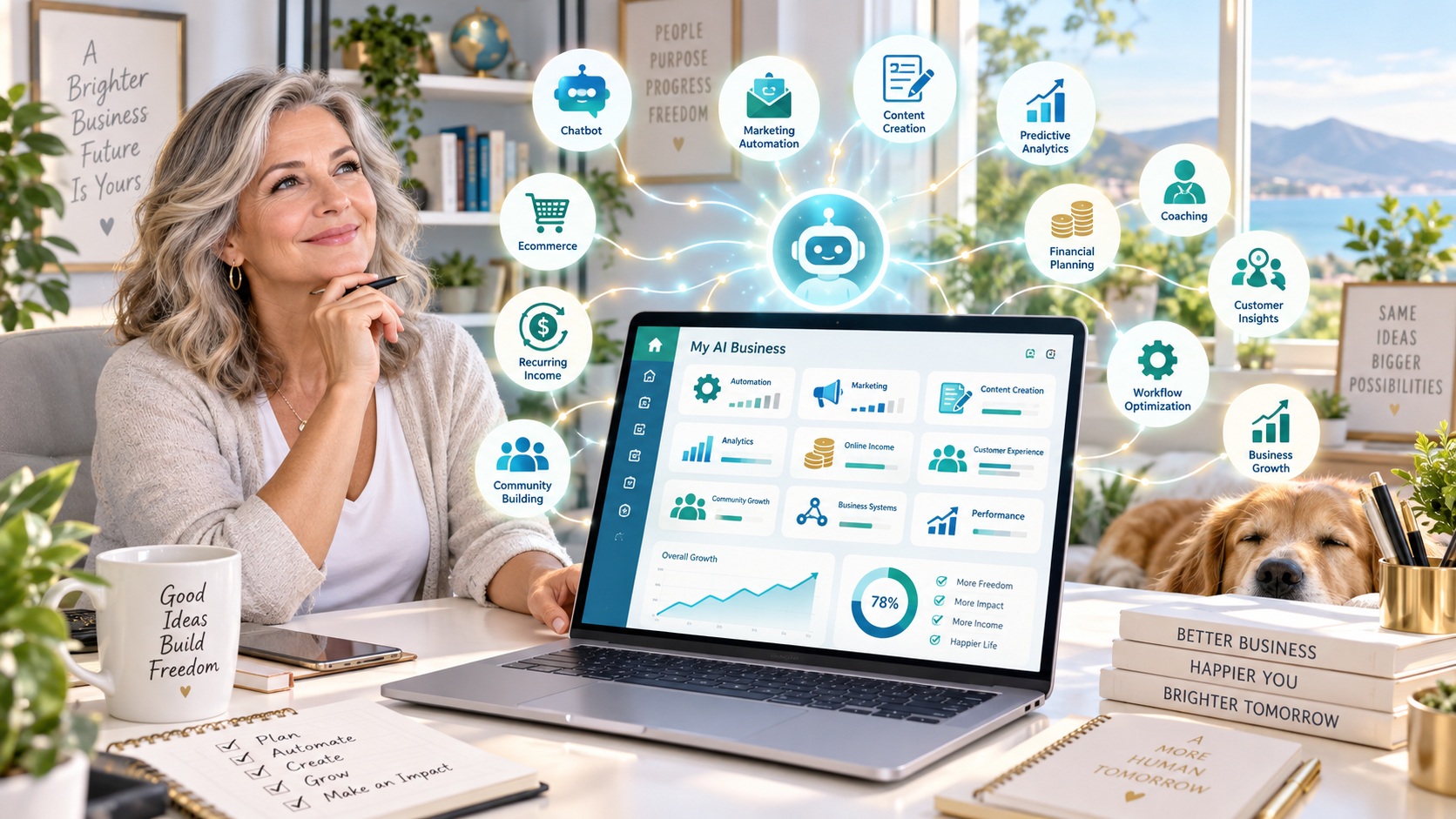
Understanding the Basics of AI in Business
Before diving into AI-powered business strategies, it’s crucial to grasp what AI truly entails. Artificial intelligence refers to machines and software designed to simulate human intelligence processes, including learning, reasoning, and problem-solving. In business contexts, AI can automate tasks, analyze vast data sets, and generate insights faster than any human could.
There are several AI branches relevant to businesses:
- Machine Learning: Algorithms that learn from data patterns to improve over time.
- Natural Language Processing (NLP): Understanding and generating human language, useful for chatbots and content creation.
- Computer Vision: Interpreting visual data, often applied in quality control or customer behavior analysis.
Companies like Amazon and Netflix use AI-powered recommendation engines to personalize experiences. For example, Amazon analyzes your shopping habits and browsing history to suggest products you’re likely to buy. This AI-driven personalization boosts customer engagement and sales.
Understanding AI’s capabilities helps in identifying where it fits in your business. AI is not a magic wand but a tool to enhance decision-making and efficiency. For instance, automating customer support with chatbots reduces response times, freeing human agents for complex tasks. According to McKinsey & Company, AI adoption can increase business productivity by up to 40%.
However, it’s important to start small. Experiment with AI tools in one area before scaling. This approach minimizes risk and builds internal expertise gradually. AI-powered business strategies are most effective when combined with human oversight and creativity.
In summary, understanding AI basics equips you to make informed decisions about integrating AI into your operations. It forms the foundation for exploring AI-powered tools and creating income streams that leverage technology’s power.
Exploring AI-Powered Tools for Online Success
Choosing the right AI tools for business can be overwhelming given the vast options available. However, focusing on your business goals helps narrow the choices. Here’s a breakdown of essential AI tools categorized by function:
Marketing Automation
- HubSpot: Uses AI to personalize email campaigns and optimize lead nurturing.
- Mailchimp: Leverages AI for audience segmentation and send-time optimization.
These tools analyze user behavior to send timely, relevant messages, increasing conversion rates. For instance, a 2023 report by HubSpot found that personalized emails deliver 6x higher transaction rates.
Content Creation
- Jasper AI: Generates blog posts, social media content, and ad copy with minimal input.
- Grammarly: Enhances writing clarity and tone using AI-powered suggestions.
AI content tools save time and maintain consistency across platforms. For example, Jasper AI can draft articles quickly, allowing you to focus on strategy and editing.
Customer Support
- Zendesk Answer Bot: Provides AI-driven customer support by answering FAQs instantly.
- Drift: Offers AI chatbots that engage website visitors and qualify leads automatically.
Automating customer support reduces operational costs and improves user experience. A case study by Zendesk showed a 25% reduction in ticket volume after implementing their AI bot.
Data Analytics
- Tableau: Integrates AI to uncover trends and visualize data effectively.
- Google Analytics 4: Uses AI to predict customer behavior and segment audiences.
Data-driven decisions are the backbone of successful AI business strategies. Tools like these enable you to spot opportunities and mitigate risks by analyzing complex data quickly.
Remember, integrating AI tools requires training your team and aligning tools with your workflow. Start with one or two platforms that address your most pressing challenges. For example, if lead generation is your focus, marketing automation and chatbot tools could provide the best ROI.
Exploring these AI tools for business success sets the stage for building sustainable online income streams that can scale efficiently.
Creating Sustainable Online Income Streams with AI
AI-powered business strategies enable entrepreneurs to develop multiple online income streams, increasing resilience and growth potential. Here are some proven models enhanced by AI:
Affiliate Marketing
AI tools can analyze customer data and optimize content to promote affiliate products effectively. Platforms like Affilorama integrate AI to suggest high-converting affiliate offers and keywords. AI also helps automate email marketing campaigns to nurture leads, increasing commissions.
Subscription Services
AI can personalize subscription offerings based on user preferences detected through behavior analysis. For example, a digital coaching business might use AI to tailor lesson plans and content delivery. This customization increases retention rates and lifetime customer value.
E-commerce
AI-powered recommendation engines boost sales by suggesting products customers are likely to purchase. Shopify merchants, for instance, can use AI apps like Kit to automate marketing tasks and monitor store performance. Inventory management AI also prevents stockouts or overstocking, optimizing cash flow.
Content Monetization
Creators can use AI to generate consistent, engaging content that attracts traffic and ad revenue. For example, bloggers can employ AI writing assistants to produce SEO-optimized articles regularly. AI-driven video editing tools speed up content production for platforms like YouTube or TikTok.
Creating sustainable online income streams requires continuous refinement. AI analytics tools help track what’s working and where adjustments are needed. For example, monitoring click-through rates and conversion funnels identifies bottlenecks that AI tools can remedy automatically, such as personalized retargeting ads.
Real-world example: A content creator using AI content generation and marketing automation grew their email list by 300% in six months, significantly increasing affiliate marketing income. AI freed their time to focus on strategic growth rather than repetitive tasks.
Incorporating AI into online income strategies not only boosts efficiency but also scales potential by tapping into data-driven insights and automation.
Building a Community Around Your AI Business
Communities play a pivotal role in business growth, especially in technology-driven niches like AI-powered business strategies. Building an engaged community fosters trust, encourages feedback, and amplifies your reach.
Leveraging Social Media and Forums
Social platforms like LinkedIn and Twitter are ideal for sharing AI insights and connecting with like-minded entrepreneurs. Joining AI-focused groups or forums such as Reddit’s Machine Learning community can help you stay updated and network effectively.
Creating your own Facebook group or Discord server provides a space for customers to interact, ask questions, and share success stories. This sense of belonging builds brand loyalty and encourages word-of-mouth referrals.
Hosting Webinars and Workshops
Offering educational sessions on AI tools for business adds value and positions you as an authority. For example, hosting a live workshop on using AI content creation tools can attract potential clients interested in starting online income streams. These events also generate leads who are more likely to convert due to the trust you build.
Gathering and Utilizing Feedback
Community feedback is invaluable for refining AI-powered business strategies. Engage your audience through surveys or polls to understand their challenges. Use this data to tailor your offerings or create new content addressing specific needs.
Active communities also provide testimonials and case studies that enhance credibility. For example, sharing success stories of members using your recommended AI tools encourages others to take action.
Building a community requires authenticity and consistency. Regularly share tips, answer questions, and celebrate member achievements. This approach nurtures long-term relationships, making your AI business more resilient and adaptable.
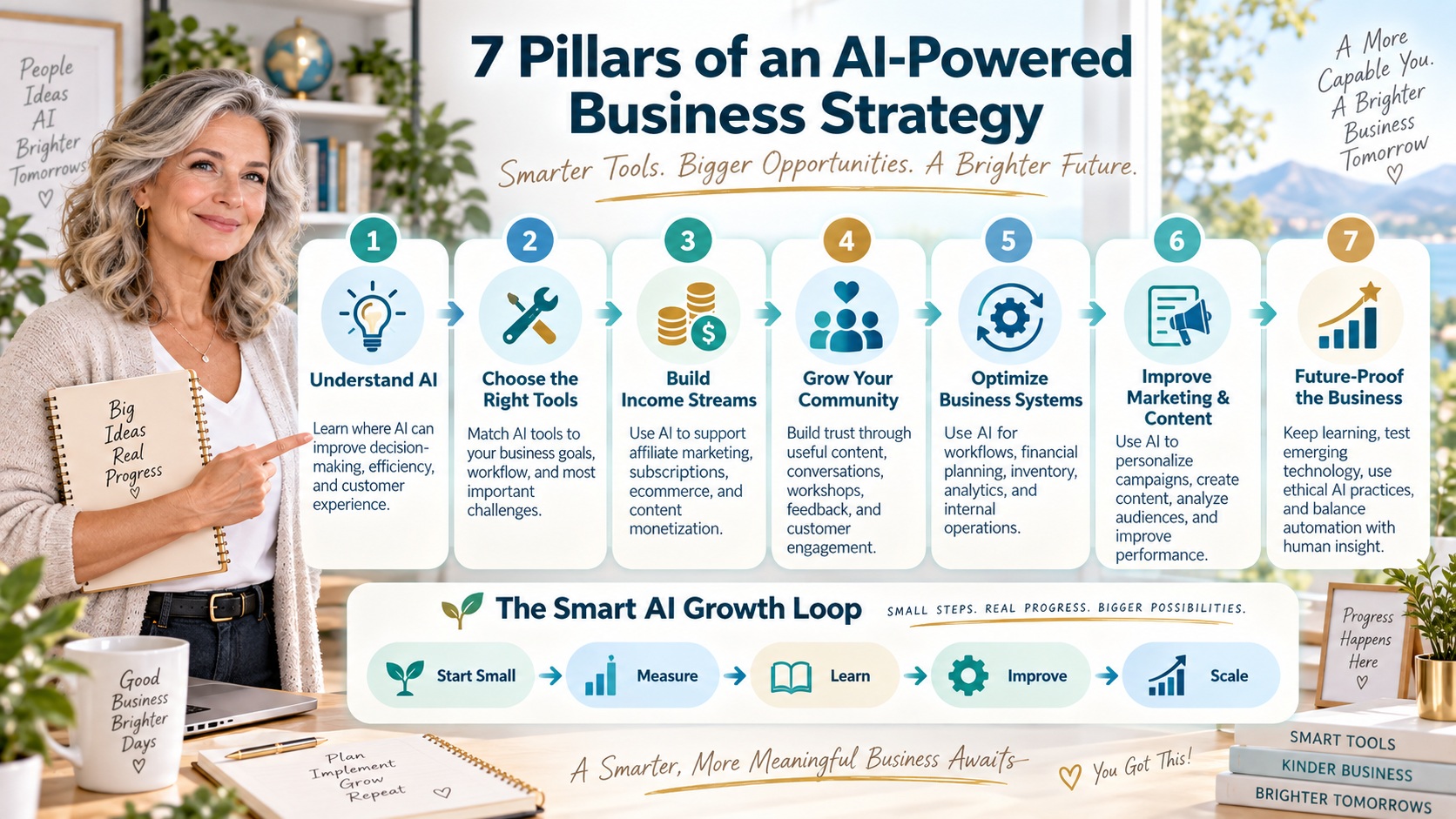
Optimizing AI Strategies for Long-Term Growth
Implementing AI-powered business strategies is just the start. Optimization ensures your efforts continue delivering value as technology and market conditions evolve.
Continuous Learning and Adaptation
AI tools frequently update with new features and improved algorithms. Staying informed through industry blogs, webinars, and training ensures you leverage the latest capabilities. For example, Google AI’s advancements in predictive analytics can offer new opportunities for customer segmentation.
Regularly review your AI implementations to identify underperforming areas. Use analytics dashboards to track KPIs such as conversion rates, customer acquisition costs, and retention metrics. Adjust your AI configurations or switch tools if necessary to improve results.
Scaling AI Implementations
As your business grows, scaling AI tools is critical. Integrate AI systems across departments like marketing, sales, and customer service to create a seamless data ecosystem. For example, connecting CRM software with AI-powered marketing automation maximizes lead nurturing efficiency.
Invest in training your team on AI literacy to maximize tool utilization. Encouraging collaboration between AI specialists and business teams fosters innovation and problem-solving.
Balancing Automation with Human Insight
While AI can automate many processes, human judgment remains essential. Regularly review automated outputs to ensure quality and relevance. For instance, AI-generated content should be edited by a human to maintain brand voice and accuracy.
Combining AI efficiency with human creativity leads to better decision-making and customer experiences. This balance is a hallmark of sustainable AI business strategies.
Long-term growth also involves ethical considerations. Transparently communicating your use of AI builds trust and complies with emerging regulations like the EU’s AI Act.
By optimizing and scaling your AI-powered business strategies thoughtfully, you position yourself for enduring success in an ever-changing digital landscape.
Integrating AI into Business Systems & Optimization
AI tools for business extend beyond marketing and sales—they revolutionize internal systems and optimization. Streamlining workflows and automating back-end processes increase efficiency and reduce errors.
Supply Chain and Inventory Management
AI algorithms forecast demand more accurately by analyzing historical sales, seasonal trends, and external factors like market shifts. For example, companies like Walmart use AI to automate restocking and reduce waste.
Small businesses can benefit from AI-powered platforms like TradeGecko that integrate inventory management with sales data, improving order fulfillment and cash flow.
Financial Planning and Analysis
AI-driven financial tools analyze spending patterns, predict cash flow, and detect anomalies. Tools like QuickBooks Advanced use AI to automate bookkeeping and generate financial reports, saving time and improving accuracy.
Proactive financial planning enabled by AI helps businesses avoid pitfalls and identify investment opportunities, essential for scaling.
Human Resources and Recruitment
AI streamlines recruitment by screening resumes, scheduling interviews, and even assessing candidate fit via predictive analytics. Platforms like Hiretual enhance talent sourcing efficiency.
Moreover, AI-powered employee engagement tools monitor morale and productivity, enabling timely interventions that reduce turnover.
Integrating AI into these systems creates a cohesive, optimized business operation, freeing you to focus on strategic growth.
Leveraging AI for Content Creation & Strategy
Content is king, but creating it consistently can be challenging. AI-powered business strategies include using AI to craft compelling content and develop data-driven strategies.
AI Writing Assistants
Tools like Jasper AI and Copy.ai generate blog posts, social media updates, and ad copy quickly. They analyze trending topics and optimize for SEO, helping you stay relevant and increase organic traffic.
Using AI for first drafts cuts down content production time dramatically. You can then refine and personalize the output, ensuring authenticity.
Content Strategy Optimization
AI tools analyze audience behavior to recommend content topics with high engagement potential. For example, Clearscope and MarketMuse help optimize content for keywords that attract your target market.
Additionally, AI can schedule posts for maximum reach and track content performance across platforms, enabling continuous strategy refinement.
By leveraging AI in content creation and strategy, you maintain a consistent brand voice while maximizing reach and ROI.
AI-Powered Marketing Techniques to Boost Sales
Marketing is a prime area where AI-powered business strategies shine. AI enhances targeting, personalization, and campaign optimization.
Predictive Customer Segmentation
AI analyzes purchasing patterns and demographics to segment customers into actionable groups. These segments allow tailored messaging that resonates more effectively. For example, e-commerce brands use AI to identify high-value customers and offer exclusive deals.
Dynamic Pricing Strategies
AI tools like Pricemoov adjust prices in real time based on competitor pricing, demand, and inventory. This dynamic pricing maximizes revenue without losing customers due to overpricing.
Ad Campaign Automation
Platforms like Facebook Ads and Google Ads incorporate AI to optimize bids and target audiences automatically. AI tests multiple ad versions and allocates budgets to the best performers, improving ROI.
These AI-powered marketing techniques help convert more prospects into customers while reducing wasted ad spend.
Coaching and Consulting with AI Insights
As AI becomes mainstream, coaching and consulting services can leverage AI insights to provide higher value to clients.
Data-Driven Client Assessments
AI tools analyze client data to identify pain points and growth opportunities. For example, business coaches can use AI dashboards to track client KPIs and tailor advice accordingly.
Automated Progress Tracking
AI systems can monitor client progress and send reminders or resources automatically, enhancing accountability and results.
Personalized Learning Paths
AI-powered platforms create customized coaching programs based on individual client needs, increasing effectiveness.
By integrating AI into coaching, consultants can scale their services and deliver measurable outcomes.
Future-Proofing Your Business with AI Innovation
AI is evolving rapidly, so staying ahead means continuously innovating and adapting your AI-powered business strategies.
Investing in AI Research and Development
Allocate resources to experiment with emerging AI technologies relevant to your niche. For example, exploring generative AI or voice recognition can open new revenue streams.
Collaborating with AI Experts
Partnering with AI specialists or consultants accelerates adoption and maximizes impact. Their expertise can help customize AI tools to your unique business challenges.
Embracing Ethical AI Practices
Adopt transparent, fair AI use policies to build customer trust. Ethical AI is increasingly a differentiator in competitive markets.
Futureproofing through innovation ensures your AI business strategies remain effective and relevant as technology and consumer expectations evolve.
Conclusion: Unlocking Success Through AI-Powered Business Strategies
Mastering AI-powered business strategies opens doors to efficiency, scalability, and new income opportunities. From understanding AI basics to exploring powerful tools, creating sustainable online income streams, building communities, and optimizing for long-term growth, each step is crucial. AI tools for business simplify complex tasks, enhance decision-making, and personalize customer experiences. As I’ve shared, integrating AI thoughtfully while balancing human insight leads to lasting success. Embrace AI today to future-proof your business and unlock its full potential.
Visit our GPT, Prompt & Skills Site – The AI Knowledge Vault
To see the full system:
 Read:
Read:
Systeme.io Review: All-in-One Business Platform
AI Business Strategies for Beginners: How to Implement AI for Growth
Enhance Your AI Business Model: 5 Expert Tips
Leveraging AI for Enhanced Online Sales Performance
Top AI Development Tools for Entrepreneurs: A Comparative Guide
Exploring Top AI Tools for Enhanced Business Automation
AI Business Strategies for Beginners: How to Implement AI for Growth
Top AI Business Models for Beginners: A Comprehensive Guide
Selecting the Ideal AI Business Model for Your Needs
📅 Last updated:
