
Unlocking Business Potential: The Power of AI in Creating Online Opportunities
AI in online business is no longer just a futuristic idea—it’s a present-day gamechanger. As someone who’s navigated the evolving digital landscape, I’ve seen firsthand how AI technology reshapes the way businesses operate and grow online. Whether you’re launching a startup or scaling an established brand, understanding AI’s role is key to unlocking new opportunities. In this article, I’ll walk you through how AI is transforming online business growth, driving digital transformation, and creating smarter strategies to win in the digital marketplace.

Understanding AI Technology in Online Business
At its core, AI technology refers to computer systems designed to perform tasks that typically require human intelligence. This includes learning from data, recognizing patterns, making decisions, and even understanding language or images. For online businesses, AI is more than just automation—it’s about enhancing capabilities to interact with customers, optimize operations, and predict trends.
Think about chatbots on e-commerce sites. They provide instant customer support, reducing wait times and improving satisfaction. But AI goes deeper. Machine learning algorithms analyze customer behavior to suggest products, personalize marketing messages, and forecast demand. For example, Amazon’s recommendation engine reportedly drives 35% of its revenue by using AI to predict what users want to buy next.
Another powerful aspect is AI-powered analytics. Tools can sift through massive amounts of data—sales figures, website traffic, social media interactions—to reveal insights that were previously hidden. This means online businesses can make smarter decisions faster, targeting resources where they’ll have the greatest impact.
AI’s impact isn’t limited to big players. Small businesses benefit too. Platforms like Shopify integrate AI tools that help sellers optimize pricing, manage inventory, and tailor advertising. This levels the playing field, allowing smaller brands to compete with industry giants.
In short, AI technology is a foundational pillar for anyone looking to thrive online. Its ability to automate, analyze, and personalize creates a dynamic environment where businesses can connect meaningfully with customers and scale efficiently.
Exploring the Role of AI in Digital Transformation
Digital transformation is the process of integrating digital technologies into all aspects of a business. AI plays a critical role in this, acting as both a catalyst and enabler. It’s not just about adopting new software but fundamentally changing how businesses operate and deliver value.
One key element of digital transformation is improving operational efficiency. AI automates repetitive tasks like data entry, customer segmentation, and inventory management, freeing up human resources to focus on strategic work. For instance, AI-driven supply chain management can predict disruptions and optimize routes, saving time and costs.
Moreover, AI fosters agility. Businesses using AI can quickly adapt to market changes by analyzing real-time data. During the COVID-19 pandemic, companies leveraging AI tools could shift their marketing, inventory, and customer engagement strategies faster than competitors. This kind of responsiveness is vital for survival and growth in the online space.
AI also supports innovation by enabling new business models. Subscription services, personalized content platforms, and AI-powered marketplaces wouldn’t be viable without AI’s ability to handle complex data and interactions at scale. Digital transformation powered by AI means businesses don’t just improve existing processes—they create entirely new revenue streams.
While AI is a powerful driver, successful digital transformation requires a cultural shift too. Companies must embrace data-driven decision-making and continuous learning. Leaders should encourage experimentation with AI tools and invest in upskilling employees to work alongside AI systems effectively.
To understand the scope of AI in digital transformation, consider this Harvard Business Review article. It highlights how AI adoption varies across industries but consistently leads to improved performance when integrated strategically.
AI Tools and Strategies for Online Business Growth
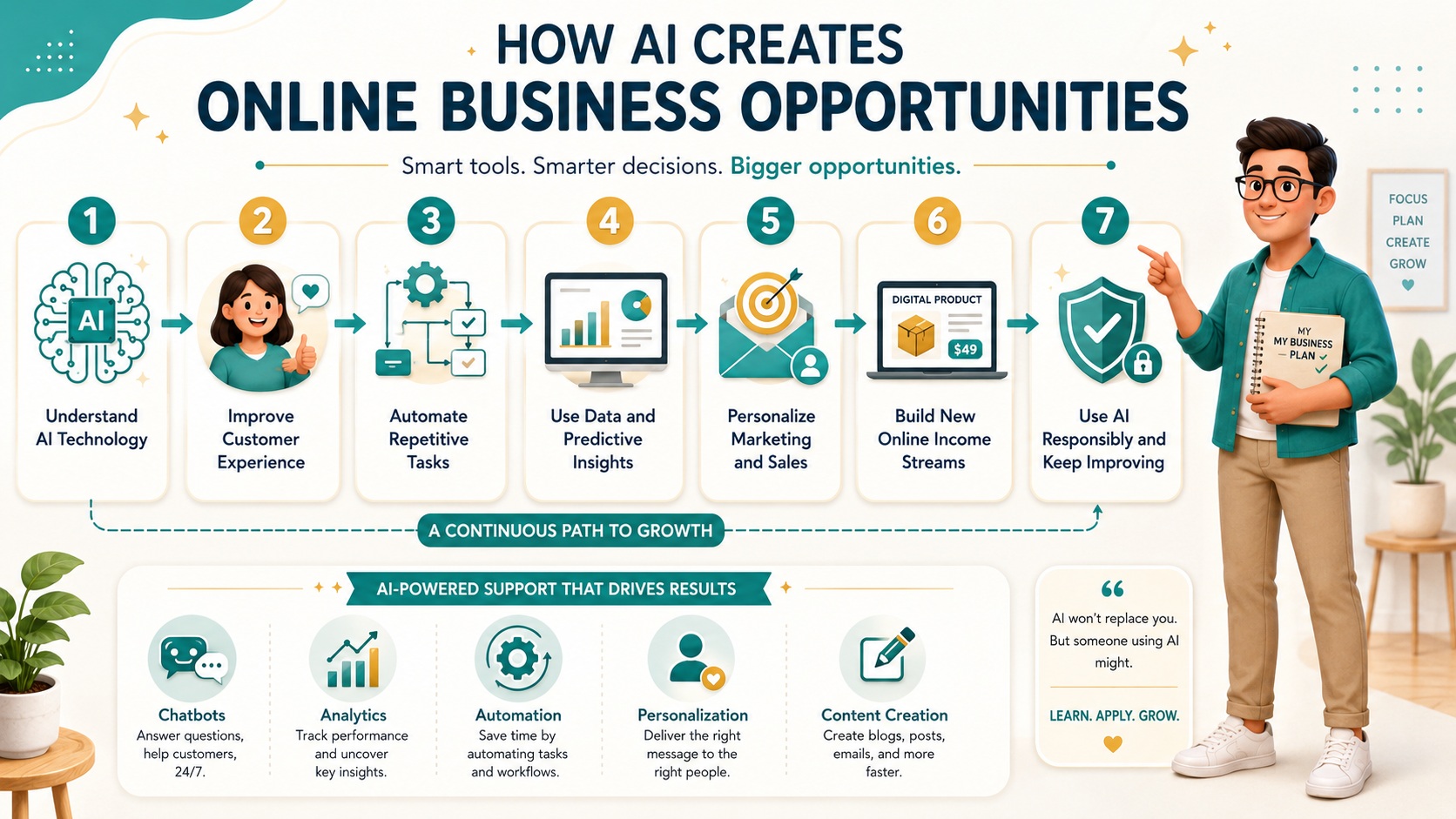
Leveraging AI in online business growth means using the right tools and strategies tailored to your goals. The good news is that the AI ecosystem offers a wide range of solutions, from marketing automation to customer insights and sales optimization.
AI-Powered Marketing Automation
Marketing is one area where AI shines. Platforms like HubSpot and Marketo use AI to automate email campaigns, segment audiences, and personalize content. AI analyzes customer interactions to determine the best time to send emails or push notifications, increasing engagement rates significantly.
For example, AI-driven dynamic content can adjust website banners or product recommendations based on user behavior and preferences in real time. This creates a highly personalized shopping experience that boosts conversion rates.
Predictive Analytics and Customer Insights
AI predictive analytics helps businesses forecast trends and customer needs. Tools like Google Analytics 4 incorporate AI to provide predictive metrics such as potential revenue from specific customer segments or churn risk. This enables proactive strategies to retain customers or upsell products.
Social media listening tools also use AI to analyze sentiment and identify emerging topics relevant to your brand. This intelligence informs content creation and community management, keeping you ahead of competitors.
Chatbots and Virtual Assistants
Customer service chatbots have become indispensable. Powered by natural language processing, they handle inquiries 24/7, provide instant responses, and escalate complex issues to human agents. This improves customer satisfaction and reduces operational costs.
Virtual assistants can also assist internal teams by automating meeting scheduling or data retrieval, increasing productivity.
AI in Sales Optimization
Sales teams benefit from AI-driven lead scoring, which prioritizes prospects based on likelihood to convert. This ensures focus on high-value leads, improving close rates. CRM platforms like Salesforce Einstein embed AI to deliver actionable insights and automate follow-ups.
Incorporating AI tools in your growth strategy is about choosing solutions that align with your business needs and integrating them seamlessly into workflows. Combining multiple AI-powered tools creates a holistic ecosystem that supports sustainable online business growth.
Implementing AI Solutions in Online Business Models
Integrating AI into your online business requires a thoughtful approach. It’s not just about buying software but embedding AI into your business model to maximize value. I’ve seen companies stumble when they treat AI as a one-off project rather than a core operational element.
The first step is identifying pain points or opportunities where AI can add the most impact. This could range from improving customer experience to optimizing supply chains or enhancing content marketing. For example, a fashion retailer might use AI to predict popular trends and manage inventory accordingly, reducing overstock and markdowns.
Next, evaluate available AI solutions based on factors like ease of integration, scalability, cost, and vendor reputation. Cloud-based AI platforms such as Microsoft Azure AI or Google Cloud AI offer flexible options that can grow with your business.
Implementation also involves data readiness. AI systems thrive on quality data, so businesses must invest in data collection, cleaning, and management. Without reliable data, AI outputs can be misleading.
Training your team is equally important. Employees should understand AI capabilities and limitations, so they can interpret results correctly and make informed decisions. Building an AI culture fosters collaboration between humans and machines, leading to better outcomes.
Finally, measure success with clear KPIs. Track improvements in customer satisfaction, conversion rates, operational efficiency, or revenue growth. Continuous monitoring allows for iterative improvements and ensures AI investments deliver tangible business results.
For further reading on AI implementation best practices, check out McKinsey’s insights on digital reinvention.
Enhancing User Experience with AI Technologies
User experience (UX) is a critical factor in online business success, and AI technologies are revolutionizing how brands interact with customers. From personalization to accessibility, AI enhances UX in ways that build loyalty and drive conversions.
Personalization is perhaps the most visible AI-driven UX improvement. AI algorithms analyze user behavior to tailor content, product recommendations, and even pricing dynamically. Netflix’s recommendation engine, powered by AI, reportedly saves the company billions by reducing churn and increasing viewer engagement.
Another AI-driven UX innovation is voice search and virtual assistants. As voice-enabled devices become mainstream, businesses must optimize for conversational queries. AI-powered voice interfaces provide hands-free, intuitive interactions that improve accessibility and convenience.
AI also enables smart chatbots that offer conversational support rather than robotic responses. Natural language processing allows these bots to understand context, sentiment, and intent, creating more human-like interactions. This leads to faster issue resolution and higher customer satisfaction.
Beyond direct interactions, AI can optimize website performance. AI tools monitor user behavior in real time, identifying friction points such as slow-loading pages or confusing navigation. These insights guide UX improvements that reduce bounce rates and increase time spent on site.
Furthermore, AI supports adaptive learning experiences. Online education platforms use AI to customize course content based on learner progress and preferences, improving outcomes and engagement.
AI Ethics and Regulations in Online Business
As AI adoption grows, so do concerns around ethics and regulations. It’s crucial for online businesses to navigate these responsibly to build trust and avoid legal pitfalls.
The main ethical issues include data privacy, algorithmic bias, transparency, and accountability. AI systems often rely on vast amounts of personal data, which raises questions about consent and security. Businesses must comply with regulations like GDPR in Europe or CCPA in California, ensuring data is collected and used transparently.
Algorithmic bias is another challenge. AI models can unintentionally perpetuate or amplify biases present in training data, leading to unfair treatment of certain groups. For example, recruitment tools that screen candidates using biased data can discriminate against minorities. Addressing this requires regular audits, diverse data sets, and inclusive design practices.
Transparency is key to building consumer confidence. Users want to know when AI is involved and how decisions affecting them are made. Explaining AI processes in clear language helps demystify technology and reduces skepticism.
Regulatory frameworks are evolving. Governments worldwide are introducing AI-specific laws to govern use, especially in sensitive areas like finance, healthcare, and advertising. Staying informed about these changes is essential for compliance and competitive advantage.
Ethical AI also aligns with brand values. Companies that prioritize fairness, privacy, and transparency often enjoy stronger customer loyalty and positive reputation.
For a deep dive into AI ethics and regulations, the World Economic Forum’s discussion offers valuable insights.
Future Trends: AI Innovations in Online Business
The future of AI in online business is exciting and full of potential. Emerging technologies will further expand the ways AI creates opportunities and drives growth.
One anticipated trend is the rise of generative AI. Tools like OpenAI’s GPT models can create content, design visuals, and even write code. This will revolutionize content creation, enabling businesses to produce personalized marketing materials at scale.
Another innovation is AI-powered hyper-personalization. Future AI systems will leverage even richer data, including emotional and contextual signals, to deliver highly tailored experiences across channels. Imagine websites that adapt instantly to your mood or location.
AI-driven automation will also become more sophisticated. Robotic process automation combined with AI will handle complex workflows end-to-end, reducing manual intervention and errors.
Integration of AI with augmented reality (AR) and virtual reality (VR) will create immersive shopping and training experiences. Customers will “try on” products virtually or attend interactive webinars powered by AI tutors.
Explainable AI (XAI) is gaining traction, addressing transparency concerns by making AI decisions understandable to humans. This will boost trust and adoption in regulated industries.
Finally, AI democratization will continue. More affordable and user-friendly AI tools mean businesses of all sizes can harness advanced technology without huge budgets or specialized expertise.
Case Studies: Successful Integration of AI in Online Business
Nothing illustrates AI’s power better than real-world examples. Here are some cases where AI transformed online businesses.
Sephora’s Virtual Artist
Sephora, a global cosmetics retailer, launched “Virtual Artist,” an AI-powered app that lets users try on makeup virtually. Using facial recognition and AR, customers can see how products look before buying. This increased online sales and reduced return rates, enhancing customer satisfaction.
Spotify’s Personalized Playlists
Spotify uses AI to analyze listening habits and create personalized playlists like “Discover Weekly.” This AI-driven curation keeps users engaged, increasing subscription retention and platform usage.
Zara’s Inventory Optimization
Zara employs AI to forecast demand and optimize inventory across stores and warehouses. This minimizes overstock and stockouts, improving profitability and customer experience.
HubSpot’s AI-Powered CRM
HubSpot integrates AI to automate lead scoring, email personalization, and sales forecasting. Users benefit from streamlined workflows and data-driven strategies that boost conversion rates.
These examples demonstrate AI’s versatility across industries and functions. By carefully integrating AI, businesses unlock new online opportunities and sustainable growth.
Conclusion
AI in online business is a transformative force that unlocks unprecedented opportunities. From understanding AI technology to implementing AI-driven strategies, embracing this innovation enables smarter decisions, enhanced user experiences, and accelerated growth. As digital transformation continues, businesses must adopt AI thoughtfully, balancing ethics and innovation. The future promises even more AI breakthroughs that will reshape how we create, market, and deliver value online. Exploring AI’s potential today sets the stage for thriving in the ever-evolving digital economy.
Visit our GPT, Prompt & Skills Site – The AI Knowledge Vault
To see the full system:
 Read:
Read:
Systeme.io Review: All-in-One Business Platform
Top AI Business Models for Beginners: A Comprehensive Guide
AI Business Model – A Comprehensive Guide to Development
AI business models for beginners – An Implementation Guide
7 Beginner-Friendly AI Business Ideas for 2026 Worth Exploring Now
AI Automation Tools Utilizing Key Advantages
A Comprehensive Guide to Beginner AI Automation Tools
Guide to AI-powered Online Business Models
Top 7 AI-Powered Side Hustles for Beginners
📅 Last updated:
