
Leveraging AI for Enhanced Online Sales Performance
AI integration online sales is no longer just a futuristic concept—it’s an essential part of boosting revenue and gaining a competitive edge in digital commerce. As someone who’s navigated the complexities of online sales strategies, I’ve seen firsthand how AI tools can transform every stage of the customer journey. From personalized marketing to predictive analytics, AI is reshaping how businesses approach sales optimization. In this article, I’ll walk you through practical AI strategies that can elevate your online sales performance and help you maximize your revenue potential.

Understanding AI Integration in Online Sales
Before diving into specific AI strategies, it’s crucial to understand what AI integration online sales truly means. At its core, AI integration refers to embedding artificial intelligence technologies into your sales processes to automate, analyze, and optimize various tasks. This can range from chatbots handling customer queries to complex machine learning algorithms predicting buying behavior.
AI systems collect and analyze large amounts of data—customer interactions, purchase histories, browsing patterns, and more. This data is then used to create actionable insights that businesses can leverage to tailor their sales approach. For instance, AI-powered recommendation engines analyze what customers are likely to buy next, increasing upsell and cross-sell opportunities.
One example of AI integration in online sales is Amazon’s recommendation algorithm. It accounts for over 35% of the company’s revenue by suggesting products based on user behavior and preferences. This shows how AI tools can influence purchase decisions and drive sales growth.
Moreover, integrating AI doesn’t require a complete overhaul of your existing systems. Many platforms offer plug-and-play AI tools that seamlessly integrate with popular e-commerce platforms like Shopify, WooCommerce, or Magento. This accessibility means businesses of all sizes can start using AI strategies to boost online sales without massive upfront costs.
Types of AI Technologies in Online Sales
- Chatbots and Virtual Assistants: Automate customer service and guide buyers through the purchase funnel.
- Predictive Analytics: Forecast customer behavior and sales trends to optimize inventory and marketing.
- Personalization Engines: Customize product recommendations and messaging based on individual preferences.
- Dynamic Pricing Tools: Adjust prices in real time based on demand, competition, and customer profiles.
Understanding these AI tools sets the foundation for leveraging them effectively to boost online sales.
Key Benefits of AI Tools for Boosting Online Sales
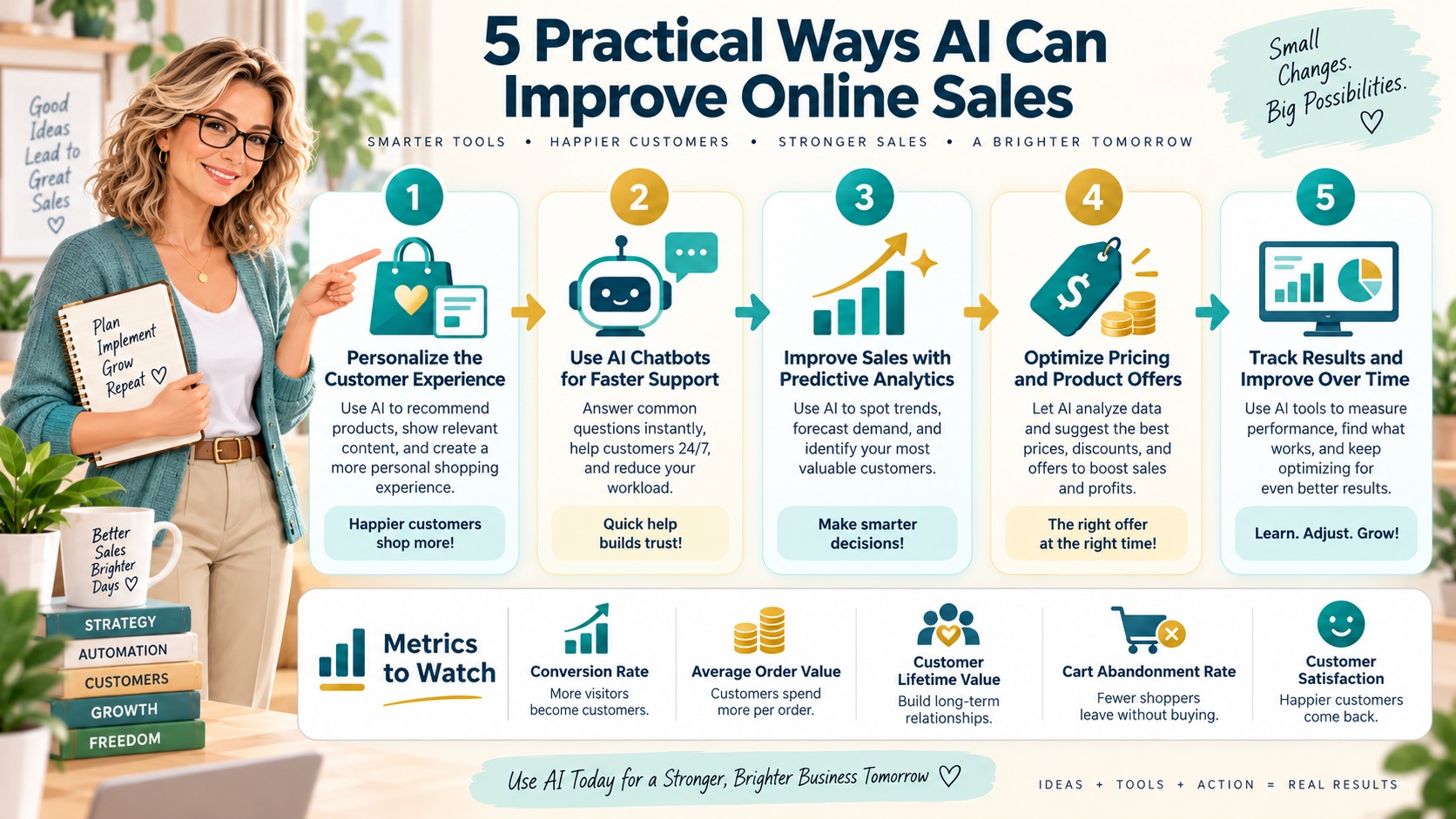
Implementing AI strategies in online sales brings a range of benefits that directly impact revenue growth and operational efficiency. I’ve seen businesses increase conversion rates and customer satisfaction simply by integrating AI-driven personalization and automation.
First, AI tools enable hyper-personalized shopping experiences. Customers today expect brands to understand their preferences and offer relevant products. AI analyzes past purchases, browsing behavior, and even social media activity to tailor product recommendations and marketing messages. According to Salesforce research, 76% of consumers expect companies to understand their needs and expectations. Personalization powered by AI meets this demand and encourages repeat purchases.
Another benefit is enhanced efficiency through automation. AI chatbots can handle routine inquiries 24/7, freeing human agents to focus on complex issues. This reduces response times and improves customer satisfaction, which often translates to higher sales. For example, IBM reports that companies using AI chatbots see a 30% reduction in customer service costs.
AI tools also improve inventory management and demand forecasting. Predictive analytics help businesses optimize stock levels, ensuring popular items are always available while minimizing overstock. This reduces missed sales opportunities and lowers carrying costs.
Lastly, AI-driven dynamic pricing strategies allow businesses to adjust prices in real time based on market conditions and customer behavior. This flexibility helps maximize profit margins while remaining competitive. An example is Uber’s surge pricing model, which uses AI to balance supply and demand effectively.
Quantifiable Impact on Sales Metrics
- Conversion Rate Improvement: Personalized AI recommendations can increase conversion rates by up to 20%.
- Customer Retention: AI-powered loyalty programs boost repeat purchases by 15-25%.
- Operational Cost Reduction: Automating customer support with AI chatbots reduces manpower expenses by 30% or more.
Clearly, the benefits of AI tools for boosting online sales extend beyond just the top line—they improve overall business sustainability and customer loyalty.
Implementing AI Strategies to Optimize Online Sales Performance
Knowing the benefits is one thing; putting AI strategies into action requires planning and evaluation. Here’s how I suggest approaching AI integration online sales for maximum impact.
Step 1: Define Clear Objectives
Start by identifying specific goals such as increasing average order value, improving customer engagement, or reducing cart abandonment. Clear objectives help you choose the right AI tools and measure success accurately.
Step 2: Choose the Right AI Tools
Select AI tools that align with your objectives and integrate smoothly with your current tech stack. For example, if your focus is enhancing customer support, invest in sophisticated chatbots with natural language processing capabilities. For marketing optimization, AI-powered email automation platforms like HubSpot offer smart segmentation and personalization features.
Step 3: Collect and Prepare Data
AI thrives on data quality. Gather data from customer interactions, sales history, website analytics, and social media. Clean and organize this data for training AI models or feeding into AI tools. Consider privacy compliance and transparent data practices to build trust with your customers.
Step 4: Test and Iterate
Deploy AI tools incrementally and monitor performance. Use A/B testing to compare AI-driven approaches with traditional methods. For example, test AI-based product recommendations against manual suggestions to see which yields better conversion rates. Iterate based on results to refine your AI strategies.
Step 5: Train Your Team
Equip your sales, marketing, and customer support teams with training on how to use AI tools effectively. Human oversight ensures AI complements rather than replaces human judgment, which is crucial for nuanced customer interactions.
Implementing AI strategies thoughtfully can transform your online sales performance by making your processes smarter and more responsive.
Measuring Success: Metrics for AI-Driven Online Sales
Once AI integration is underway, tracking the right metrics is essential to understand its impact. I recommend focusing on both quantitative and qualitative indicators to get a full picture of performance.
Key Performance Indicators (KPIs) to Track
- Conversion Rate: The percentage of visitors who complete a purchase. AI should drive an increase here through personalized experiences.
- Average Order Value (AOV): AI tools often increase AOV by recommending complementary products or upsells.
- Customer Lifetime Value (CLV): Measures the total revenue a customer generates over time. AI-driven retention strategies aim to boost this metric.
- Cart Abandonment Rate: AI can reduce abandonment by offering timely incentives or assistance during checkout.
- Customer Satisfaction Scores: Post-purchase surveys and chatbot feedback provide insights into AI’s effect on experience quality.
Using Analytics Platforms
Integrate AI analytics dashboards or connect AI tools with platforms like Google Analytics to track user behavior and sales funnel progress. Detailed reports help identify bottlenecks and opportunities for further AI optimization.
Real-World Example
Shopify merchants using AI-powered email marketing have reported a 29% increase in open rates and a 13% boost in sales conversions, showing the power of data-driven AI strategies. Monitoring these metrics regularly ensures you don’t miss out on growth opportunities.
Enhancing Customer Experience Through AI Integration
Customer experience is a major driver of online sales success. AI integration online sales can revolutionize the way customers interact with your brand, making shopping easier and more enjoyable.
Personalized Shopping Journeys
AI algorithms analyze multiple data points to tailor product recommendations, content, and offers uniquely to each visitor. This personalization creates a sense of connection and relevance that traditional sales methods often lack. For example, Netflix’s AI-driven content suggestions keep viewers engaged by predicting preferences accurately.
24/7 Customer Support
Chatbots powered by AI provide instant support, answering FAQs, tracking orders, or even assisting with returns. This responsiveness enhances trust and reduces friction in the buying process. Brands like Sephora use AI chatbots to offer personalized beauty advice, blending customer service with sales.
Voice Commerce and AI Assistants
Voice-activated AI assistants like Amazon Alexa and Google Assistant are becoming popular shopping tools. Integrating voice commerce capabilities allows customers to make purchases hands-free, catering to convenience and accessibility trends.
Reducing Friction with AI
AI can detect when shoppers hesitate—like lingering too long on a product page or abandoning a cart—and trigger targeted actions such as special discounts or live chat offers. This proactive approach helps close sales that might otherwise be lost.
AI Integration Best Practices for Online Sales
Deploying AI tools effectively requires more than just technology—it demands strategy and ethical considerations. Here are some best practices I’ve found essential for successful AI integration online sales.
- Start Small and Scale: Begin with pilot projects to test AI tools on specific sales functions before expanding broadly.
- Ensure Data Privacy: Maintain customer trust by complying with regulations like GDPR and being transparent about data use.
- Maintain Human Oversight: Use AI to augment human capabilities, not replace them. Human judgment is critical for complex decisions.
- Focus on User Experience: Avoid intrusive AI implementations that disrupt or annoy customers. Seamless integration leads to better adoption.
- Continuously Update AI Models: AI algorithms improve with fresh data. Regularly retrain models to keep recommendations and predictions accurate.
Following these practices ensures that AI integration online sales deliver sustainable benefits and builds long-term customer loyalty.
Future Trends: AI’s Impact on Online Sales Strategies
Looking ahead, AI will continue to evolve and shape online sales in exciting ways. Here are some emerging trends that I’m watching closely:
Hyper-Personalization with Advanced AI
AI will leverage even more data sources, including real-time social media sentiment and biometric feedback, to create ultra-personalized shopping experiences. This will deepen engagement and conversion potential.
Augmented Reality (AR) and AI Fusion
Combining AI with AR technology will allow customers to virtually try products before buying—think virtual fitting rooms or furniture placement previews. This reduces purchase hesitation and returns.
AI-Powered Sales Forecasting and Supply Chain Optimization
AI will enable more accurate, dynamic forecasting that adjusts inventory and logistics in real time, reducing waste and improving customer satisfaction through timely product availability.
Voice and Visual Search Expansion
As voice and visual search technologies mature, AI will play a bigger role in helping customers find products naturally. This will require businesses to optimize content for new search modalities.
Ethical AI and Transparency
Consumers will demand more transparency about how AI influences their shopping experience. Brands that prioritize ethical AI use will build stronger trust and loyalty.
Staying ahead of these trends will be vital for businesses wanting to remain competitive and continue boosting online sales effectively.
Conclusion
AI integration online sales offer tremendous opportunities to enhance every aspect of the sales process—from attracting and engaging customers to optimizing operations and driving revenue growth. By understanding the benefits, implementing thoughtful AI strategies, and measuring success with the right metrics, you can create a smarter, more efficient online sales engine. Remember, the key is to blend AI’s capabilities with human insight, ensuring a personalized and seamless customer experience. As AI technology continues to advance, embracing these tools today will position your business for lasting success in the digital marketplace.
Visit our GPT, Prompt & Skills Site – The AI Knowledge Vault
To see the full system:
 Read:
Read:
Systeme.io Review: All-in-One Business Platform
AI Business Strategies for Beginners: How to Implement AI for Growth
Implementing AI in Online Business Models
AI-Powered Automation for Novices
Establish an AI Business System
AI Business Growth for Beginners
📅 Last updated:
